Express 24h delivery for orders placed before 1pm
- Promotions
- Kits
- Washing
-
Rim & Tire
Rim & Tire - Sale
- New
-
Decontamination
Decontamination - Sale
- New
-
Correction & Polishing
Correction & Polishing - Sale
- New
- Protection
- Interior
-
Windows
Windows - Sale
- New
-
Accessories
Accessories - Sale
- New
- Others
- Professional products
- Brands
- My pro area
- Wishlist
- Blog
Presentation of two GYEON polish references: Q2M Compound+ & Q2 Primer
- Products: Q2M Compound+, Q2 Primer.
- Manufacturer: GYEON
- Packaging: 120ml, 1L.
GYEON is a brand rather well known and respected for its ceramic treatments. However, it offers a fairly comprehensive polish range, well thought out and with an answer for every type of defect or clear coat type.
In this test today, we propose to focus on two very interesting references, if not the most interesting ones: Q2M Compound+ and Q2 Primer.
We will study the strengths and weaknesses of each polish and verify whether the promised claims hold up.
Presentation:
The GYEON polish range consists of 4 references. Listed in increasing order of abrasiveness, we find: Q2 Primer, Q2M Polish, Q2M Compound, and finally Q2M Compound+
It is also worth noting that the labels of the three most abrasive polishes are quite similar in color, while that of the finishing polish (Q2 Primer) is distinctive.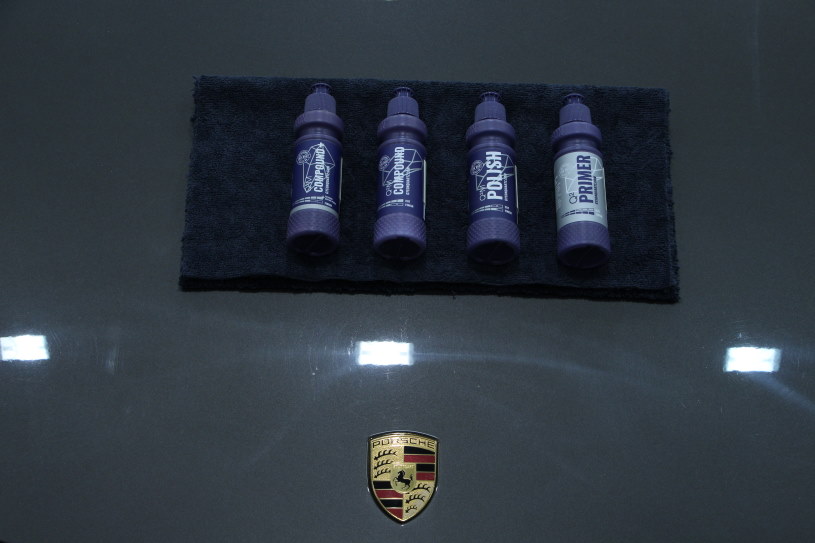
Usage:
The chosen test surface presents numerous defects of all kinds: micro-scratches, holograms, deeper scratches, oxidation marks (tree sap, bird droppings). The Porsche clear coat is original, known to be hard, and will therefore be perfect for using Q2M Compound+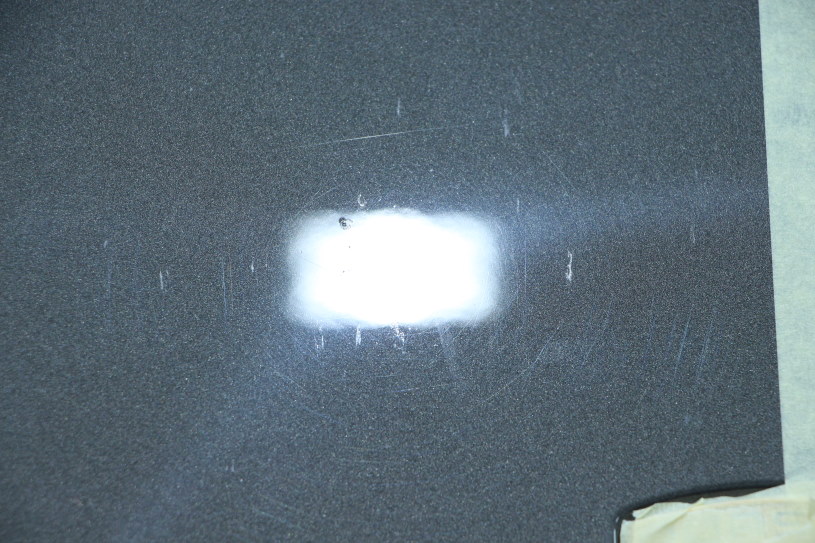
First abrasive under test then, Q2M Compound+
This polish is the latest addition to the GYEON polish range. It does not replace Q2M Compound but complements it by offering an even higher cutting capacity. The finish is described as similar. The Q2M Compound+ label clearly indicates improved cutting power on the cut scale ('Extended Cutting Power')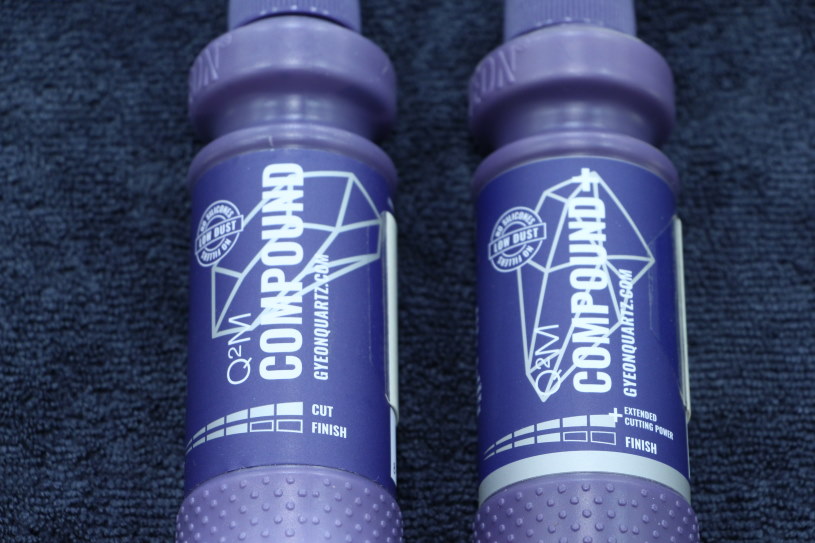
It should also be noted that GYEON polishes are advertised as producing very little dust (Low Dust). We will verify this in a few moments.
Compound+ can be worked with a hard to very hard foam pad, and even with a microfiber pad. Here we chose a foam pad from the brand ALCHIMY7 (medium-hard blue), another from the brand FICTECH (ultra hard white) and a microfiber pad from the brand FLEXIPADS (prototype).
You can also work Compound+ on a rotary polisher with a wool pad without any issue.
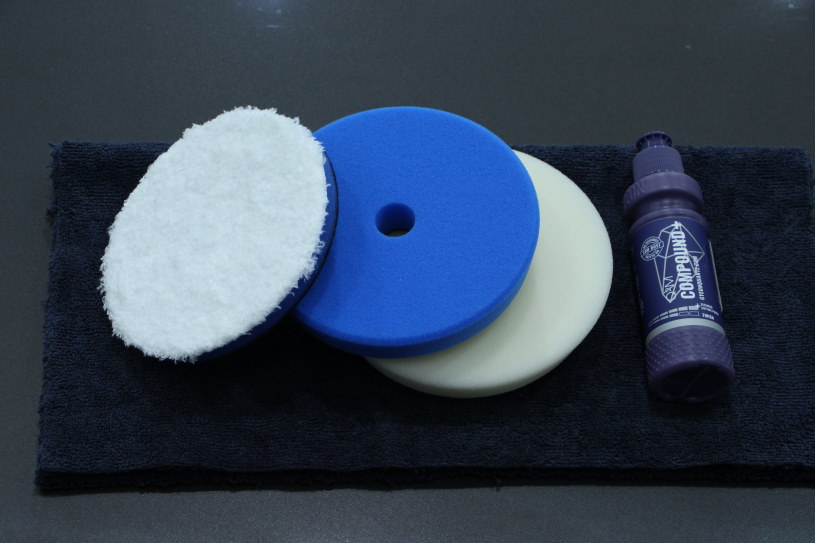
We start by testing Compound+ on a blue medium-hard pad ALCHIMY7.
The pour spout on the 120ml bottle is very practical. We also appreciate the compact 120ml format, especially for those who want to use this ultra-compound only in very specific cases (correcting deep scratches, localized buffing, etc.)
Intentionally, we apply more product than necessary on this new pad. The polish feels quite liquid, but less liquid than one from the SONAX Profiline range, for example.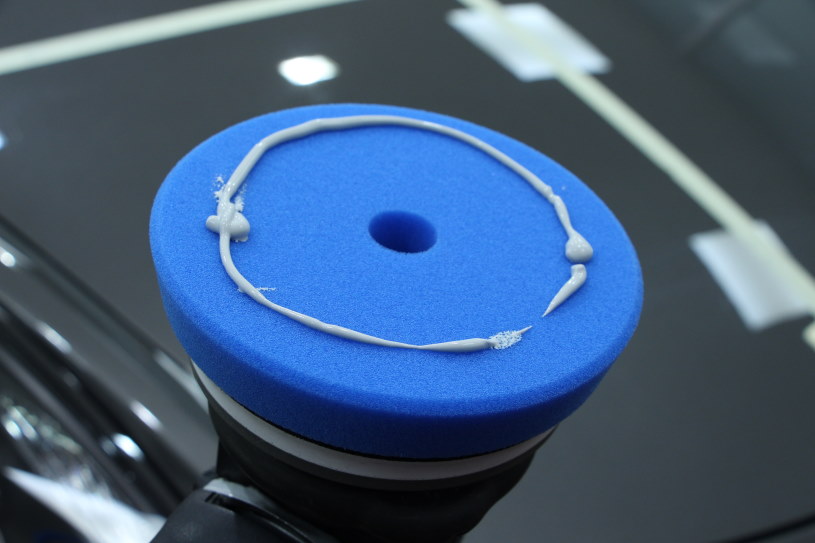
We start on this test hood with a small section (area of approximately 60x60cm) at maximum speed (gradually increased).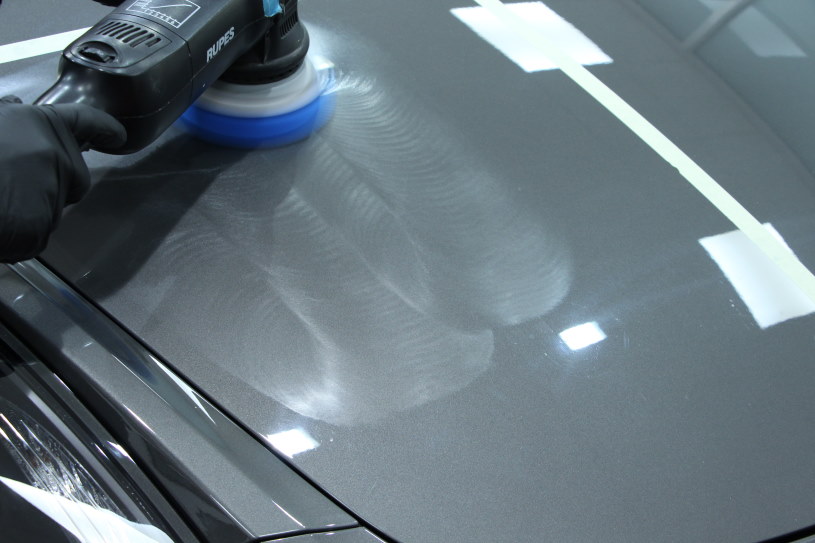
The polish works quite long which is very pleasant, and the break point appears fairly clearly (transparent haze). However, we notice that Q2M Compound+ still creates quite a bit of dust. And it cannot be the pad's fault, as it is brand new.
We are not entirely convinced by the 'Low Dust' claim made by GYEON. At least not for this polish as it stands.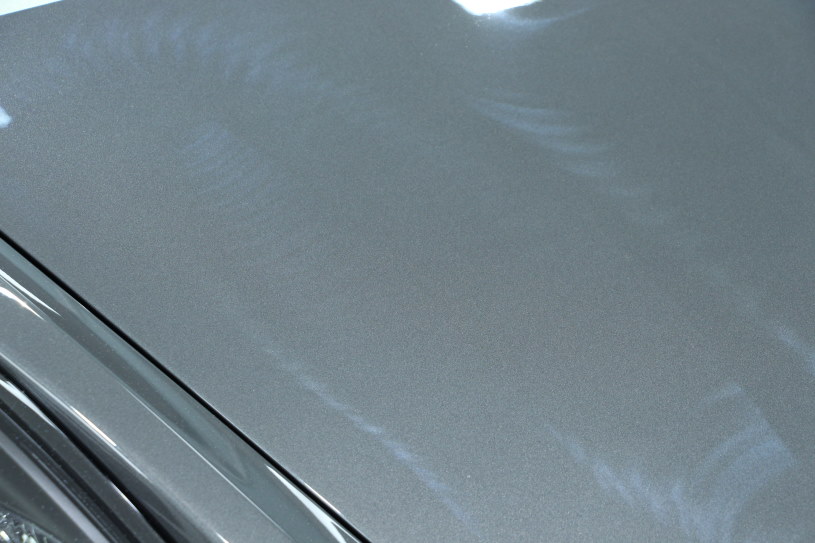
Below, the dust generated after a single pass. If you wish, you could 'prime' your pad, meaning spray a little quick detailer on the foam to reduce some dust, but you would lose pure cutting ability. The goal here is not to skew the test.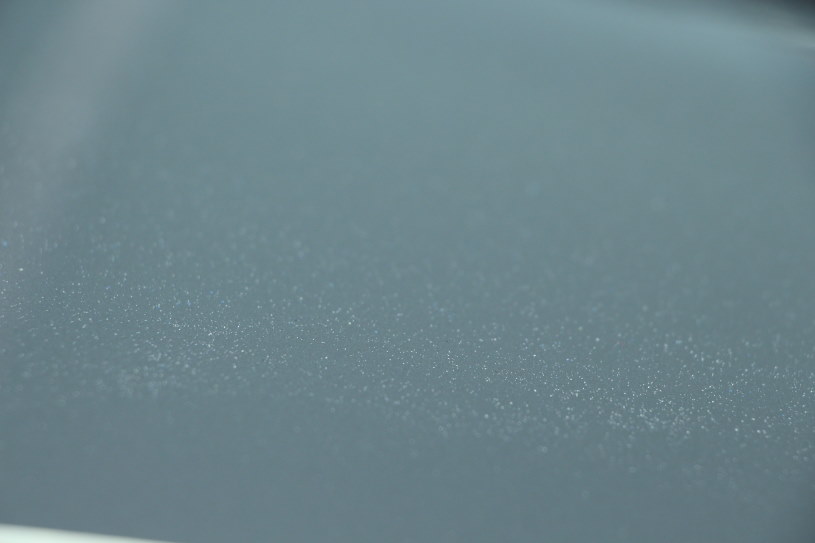
That said, Q2M Compound+ proves to be extremely effective. After a wipe-down with Q2M Prep (excellent, by the way), the cut is superb. But what is also very interesting is the finish left when used with a semi-hard pad like the one tested.
No sanding haze or light holograms. The color certainly helps but the result is still surprisingly effective for a hard clear coat. All in a single pass!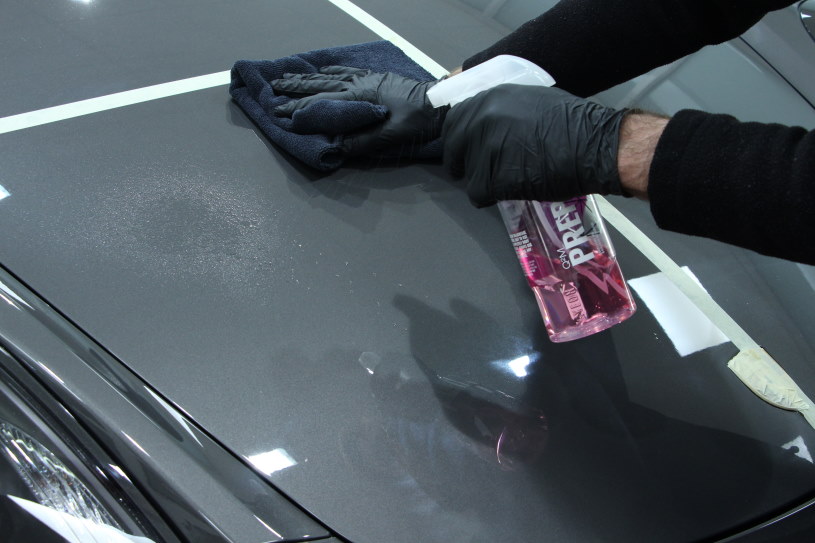
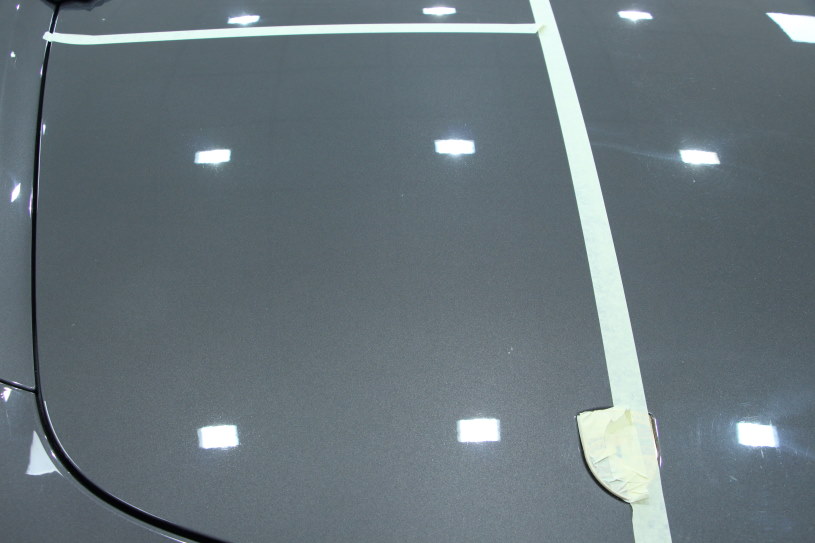
Below, a 50/50 shot directly after using Q2M Compound+ with the blue pad ALCHIMY7.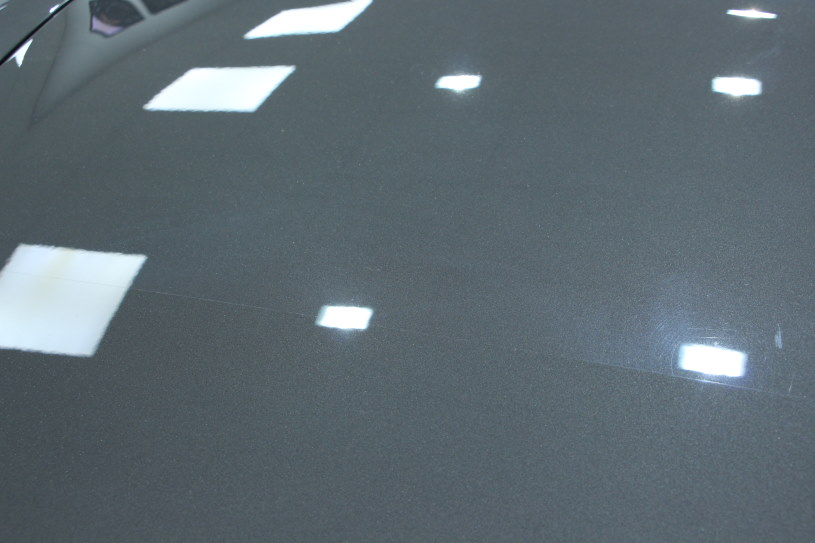
Now, if we look very closely and really scrutinize the results, we realize that very deep scratches are only partially reduced. We can go even further and take even more advantage of the superb cut of Q2M Compound+. To do this, we need to change the pad and switch to microfiber (or a wool pad).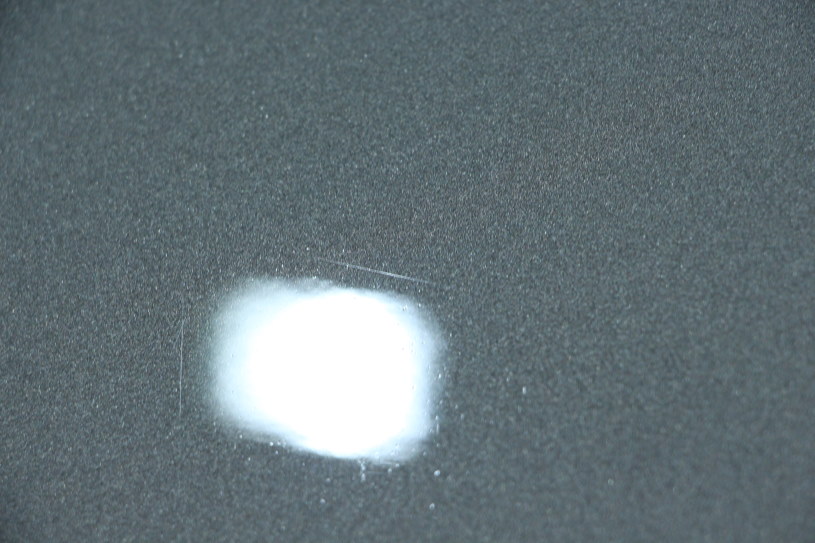
Here, we change the pad and switch to a microfiber pad (FLEXIPADS prototype).
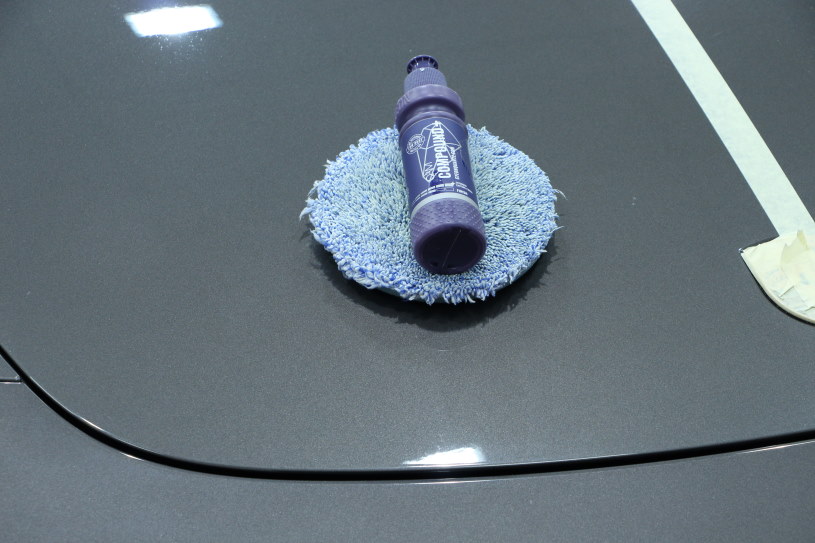
In this case, it is essential to properly saturate your microfiber with Q2M Compound+ to avoid creating too many unwanted defects.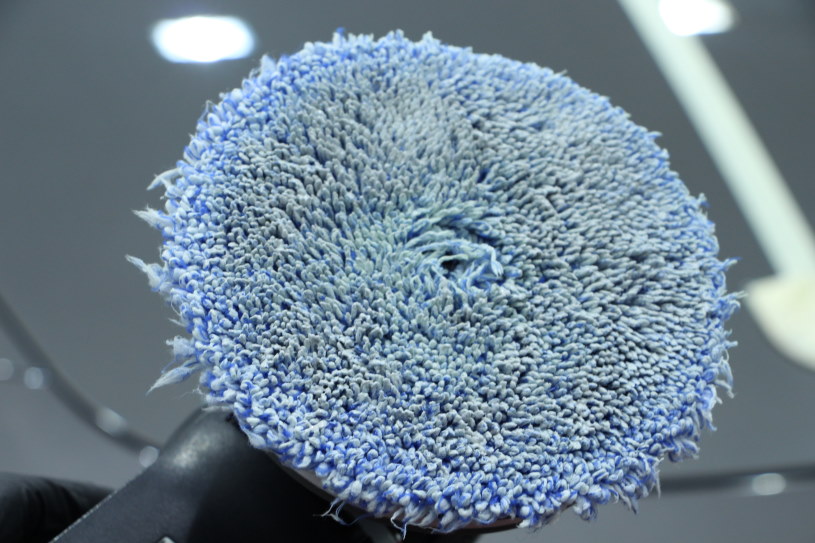
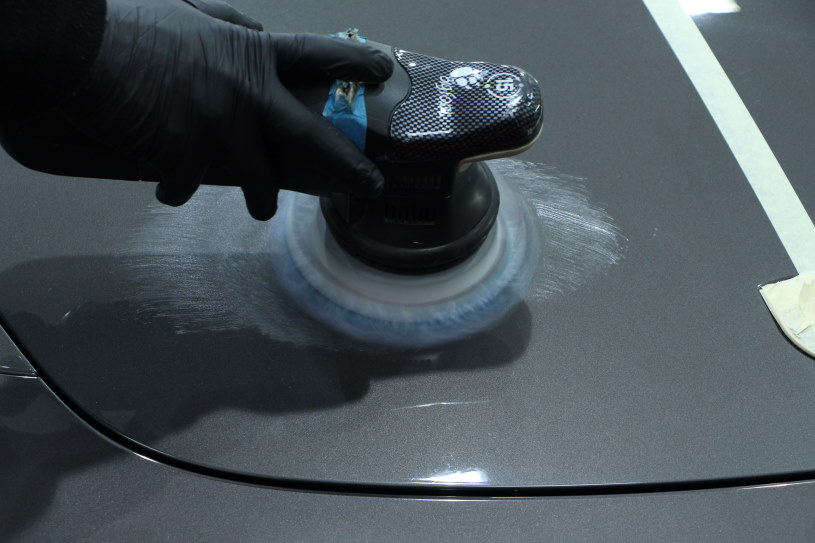
We divide the test area in two to clearly observe the gain in cut but especially to see whether we lose anything in finish compared to a standard foam pad.
After several passes at speed 4-5, the results are in. The correction is impressively effective but we lose a great deal in finish. A fairly noticeable sanding haze (marring) is observed. The pad is largely responsible. It is also worth noting significantly less dust when using a fiber pad compared to a foam pad.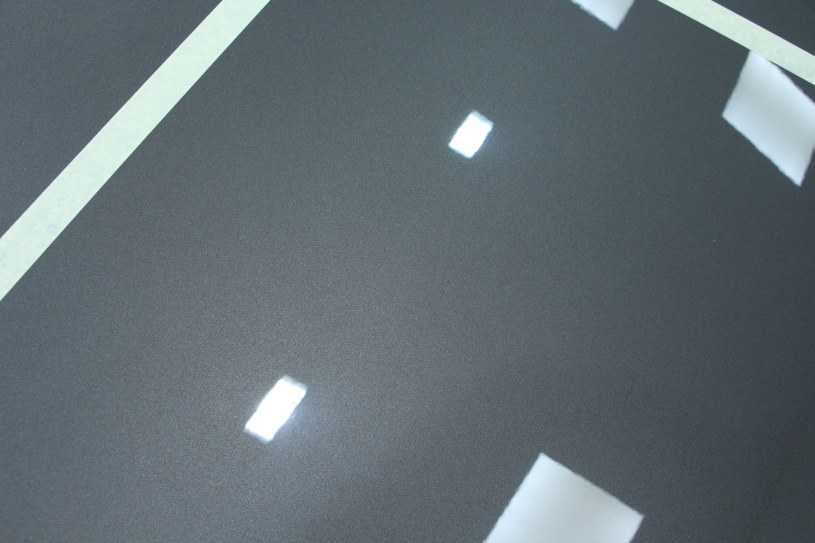
Ultimately, you cannot win on all fronts. Compound+ is an excellent hard compound that can correct heavy defects but it can only deliver its full power when used with appropriate pads. You will lose in finish, certainly, but when correcting a clear coat you are most often looking to fully correct, with the finishing work being a second step.
This is where the second polish in this test comes in: Q2 Primer.
This is a very interesting polish and we will see why further on. In any case, consider Q2 Primer as a finishing polish.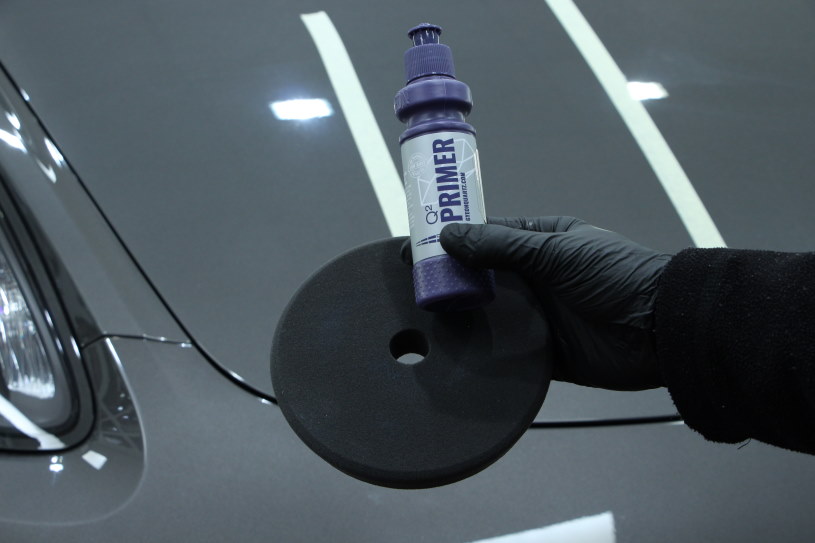
Like any finishing polish, Q2 Primer should be used with a finishing pad (black FICTECH pad in this test).
Q2 Primer contains very few abrasives but delivers an impeccable finish on the other hand, free of finishing defects, with a very high gloss.
Simply apply 4 small dots on the edge of the pad and always work on a small section.
In our test, we will re-work the area previously treated with Q2M Compound+ and the microfiber pad in order to assess Q2 Primer's ability to correct the defects (sanding haze) left by the ultra-compound.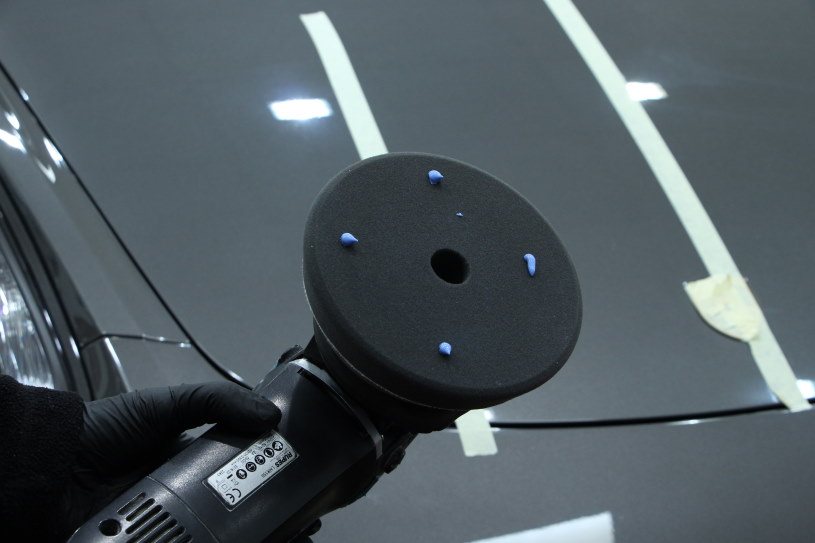
Work Q2 Primer at speed 4-5 maximum until the translucent haze appears. There is no need to work it any longer, as you risk drying it out on the surface.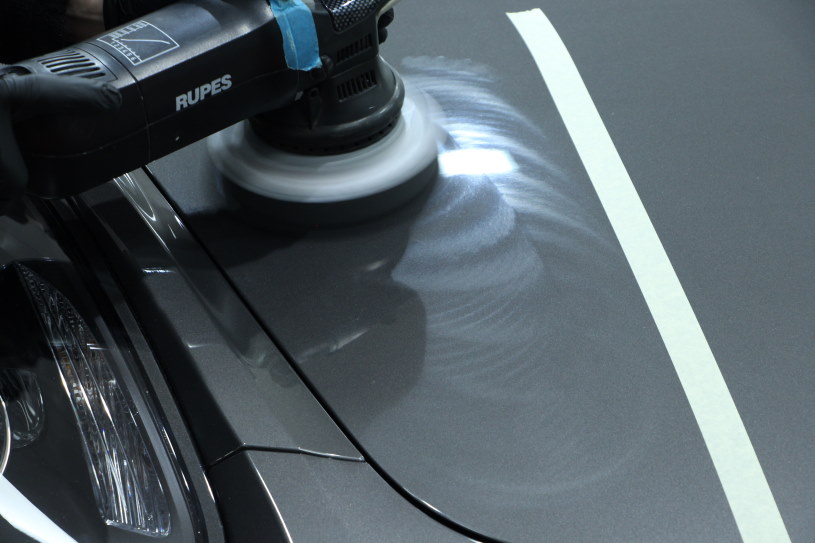
And this is where this polish becomes interesting. Indeed, with Q2 Primer you have the option of simply wiping it off without using an ISO alcohol like Q2M Prep. You will thus benefit (after a minimum of 12 hours of drying time) from a ceramic base that will promote the adhesion of your ceramic treatment afterwards.
Some will see this as an advantage since it avoids an alcohol wipe-down and thus the risk of creating fine defects, especially on delicate clear coats. But you still have to wait 12 hours before applying your coating! So you need to have done your finishing pass in the evening and come back to coat the next morning, or otherwise find something else to keep you busy on the car in the meantime.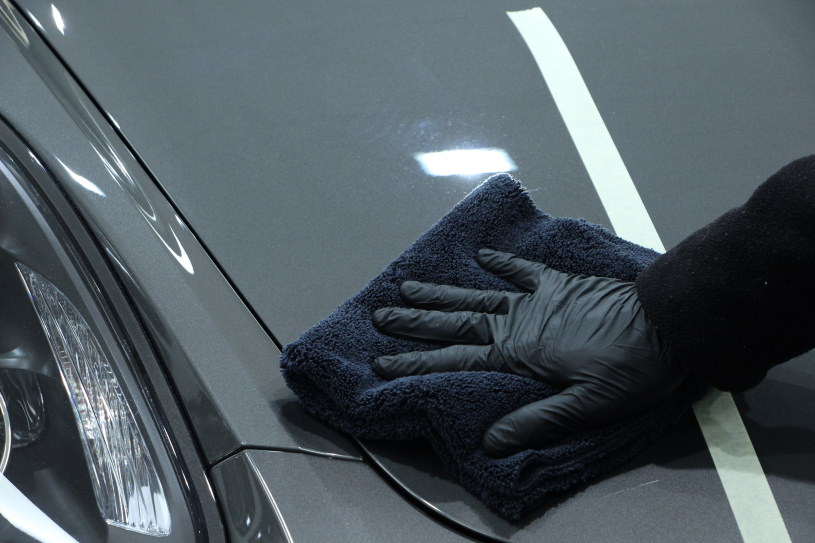
Alternatively, you can as usual wipe Q2 Primer off like any polish, with an alcohol-based solution and a microfiber cloth. You will however lose the base left by Q2 Primer once it has polymerized, but you can continue your work.
It is worth noting the strikingly easy wipe-off of this polish. Dry or with alcohol, this polish is a pleasure to wipe off.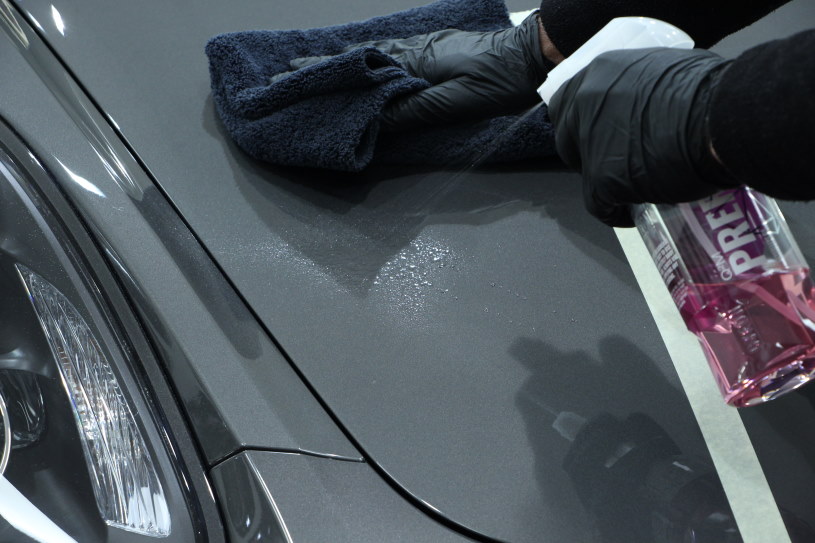
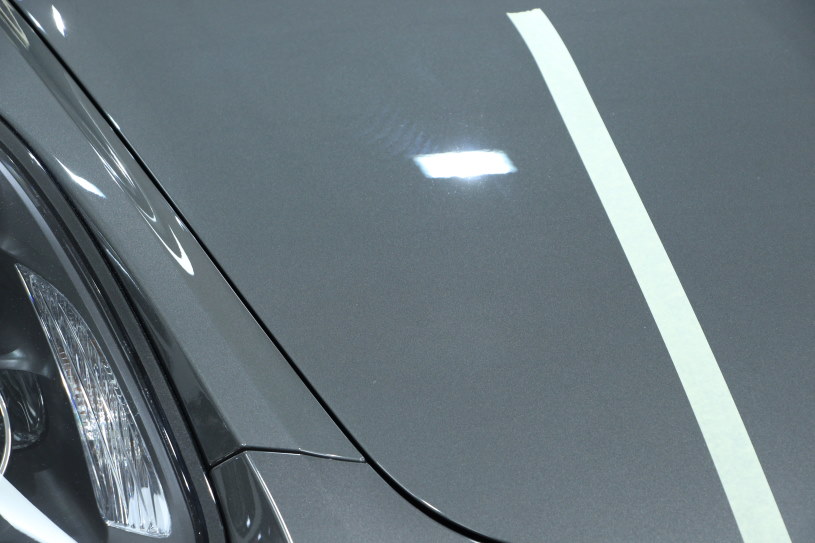
Furthermore, we find that Q2 Primer is perfectly capable of correcting the defects left by Q2M Compound+. Better still, it leaves a flawless, impeccable finish. The metallic paint comes out beautifully afterwards.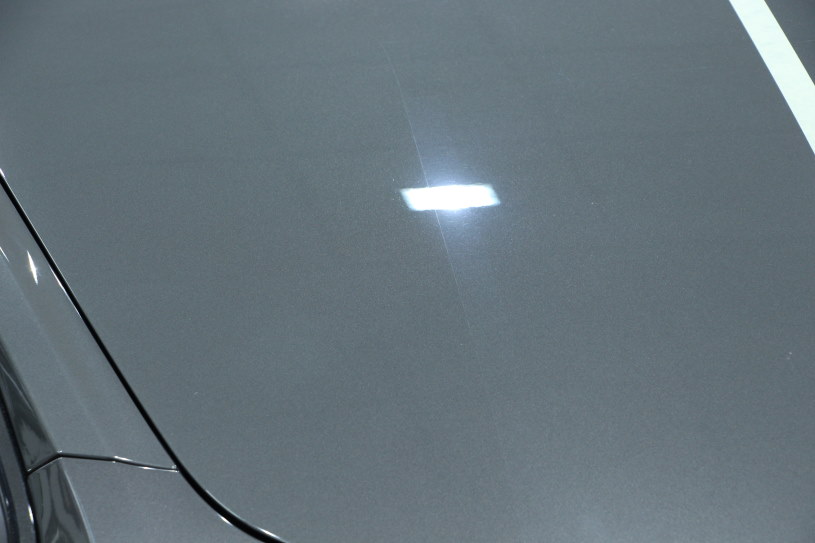
Once the hood is fully corrected and finished with this polish combo, the result is impeccable. The deep defects are removed and the finish is flawless. Quite impressive to see how easily Q2 Primer manages to correct the haze of defects left by Q2M Compound+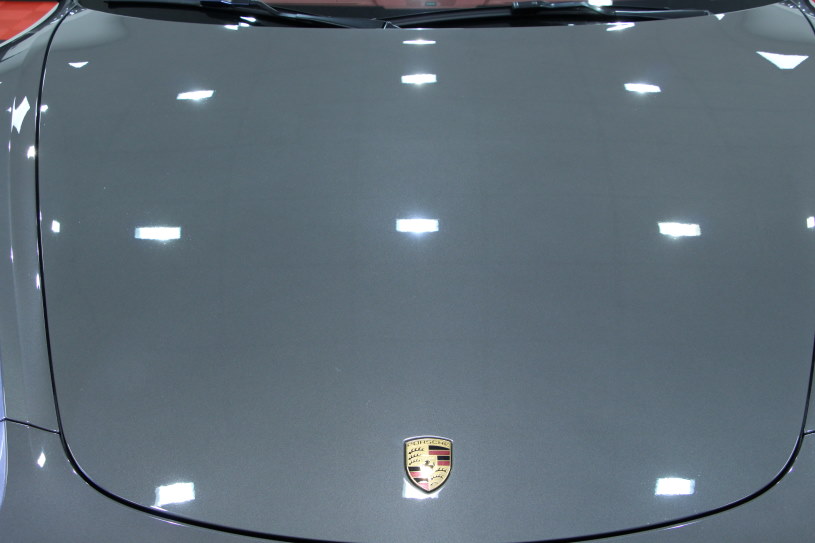
Conclusion:
Another strong proof of effectiveness from these Q2M Compound+ and Q2 Primer polishes from GYEON. Pleasant abrasives to use, offering excellent correction (Q2M Compound+) but also with an outstanding finish. A bit of dust to note (Q2M Compound+) despite what GYEON claims, but it remains within the average for compounds.
Q2 Primer is impressive. Ease and pleasure of use, wipe-off, and finish. With the technique of leaving it to cure for 12 hours without degreasing with alcohol, you also benefit from a light protection and a solid base for applying your coating.
Now let's talk about pricing. We mentioned the advantage of finding these polishes in 120ml format, yes, but at what cost! €11 to €13 for 120ml, which is very expensive compared to the competition in terms of cost per liter. GYEON is an elitist brand, they don't give their products away... That said, Q2 Primer is so economical in use that ultimately the small 120ml bottle will take you a long way.
Quality products that come at a price for top-quality work. Worth trying and adopting.
Advantages
+ Corrective power (Q2M Compound+)
+ Pleasant semi-liquid texture
+ Easy wipe-off (Q2 Primer)
+ Protection left behind (Q2 Primer under the described application conditions)
+ Glossy finish (Q2 Primer)
Disadvantages
- Still dusty (Q2M Compound+)
- Expensive pricing in 120ml