Express 24h delivery for orders placed before 1pm
- Promotions
- Kits
- Washing
-
Rim & Tire
Rim & Tire - Sale
- New
-
Decontamination
Decontamination - Sale
- New
-
Correction & Polishing
Correction & Polishing - Sale
- New
- Protection
- Interior
-
Windows
Windows - Sale
- New
-
Accessories
Accessories - Sale
- New
- Others
- Professional products
- Brands
- My pro area
- Wishlist
- Blog
Complete protection of the engine bay
- Products: DLux, Car Lift Crystal, Q2 Primer, Eraser.
- Manufacturers: CARPRO, GYEON, FICTECH.
- Packaging: As a kit (DLux, Car Lift Crystal), 500ml/1L/4L (Eraser), 120ml/1L (Q2 Primer)
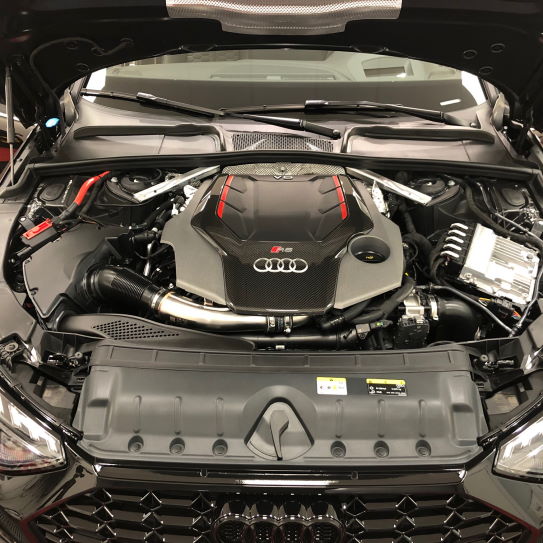
We have presented degreasers and other all-purpose cleaners many times over in articles and videos, but far less often durable and effective protection products against high temperatures in an engine bay.
This article will allow you to (re)discover some essential products with broad versatility, enabling you to treat other surfaces afterwards.
In engine bays, few people realize how extreme the constraints are, and how thorough the maintenance and protection need to be.
Overview:
What kinds of surfaces can be found in an engine bay that need treating? Synthetic materials such as hard plastics, elastomers (hoses and seals), painted surfaces, metal parts (air conditioning lines, engine mounts, etc.
Plastics and rubbers such as hoses and seals are the elements that suffer most from regular temperature rises and seasonal changes.
To durably and effectively treat these surfaces, we offer CARPRO DLux. A ceramic-based treatment specifically designed to treat these surfaces — but not only. Indeed, you can also treat your wheels, and more generally any metal surfaces subject to temperature stress.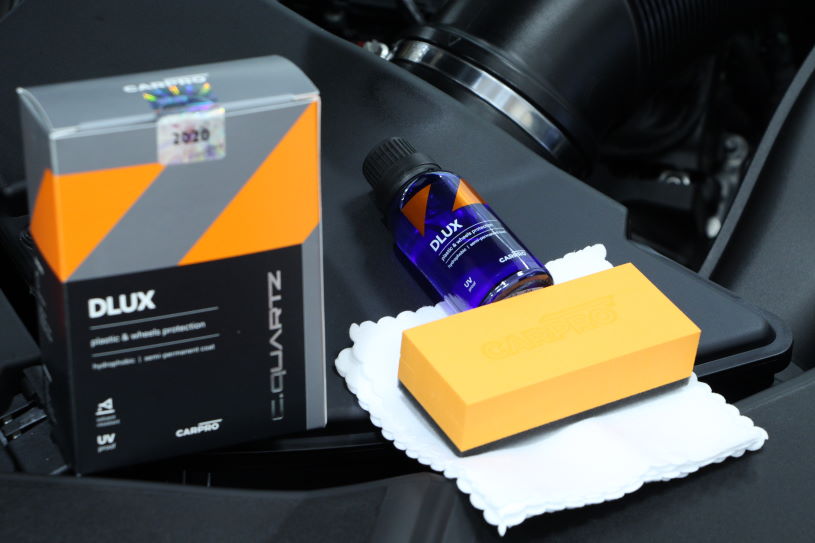
This product is one of the flagship references from the Korean brand CARPRO. You can also find an article we wrote for you about its benefits on the exterior of the car in particular.
Always offered as a kit, but with a revised and updated version, it is a go-to reference for treating the plastics/seals/hoses of your engine bay.
As always, start by degreasing your surfaces (using a degreaser or APC), but above all, use an ISO alcohol-based product such as Eraser from the same brand. Indeed, DLux requires a base free of any product residue in order to bond, and an unrinsed degreaser or APC could leave detergent traces.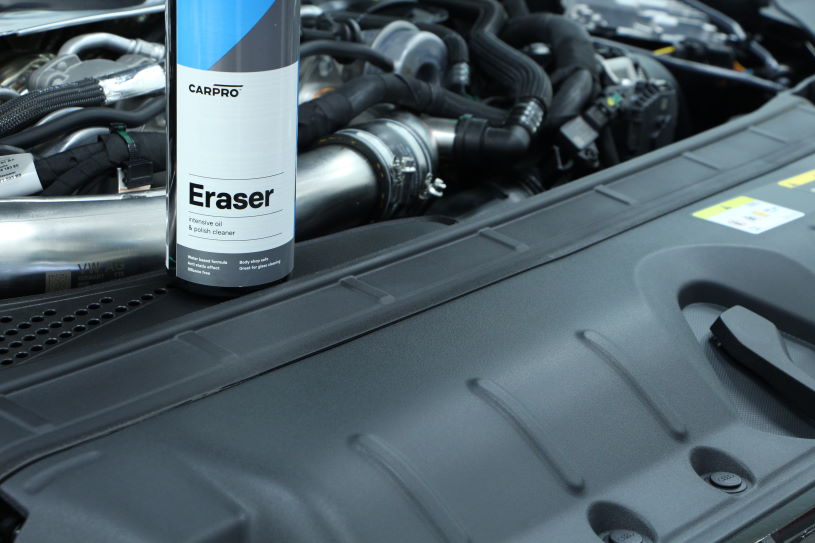
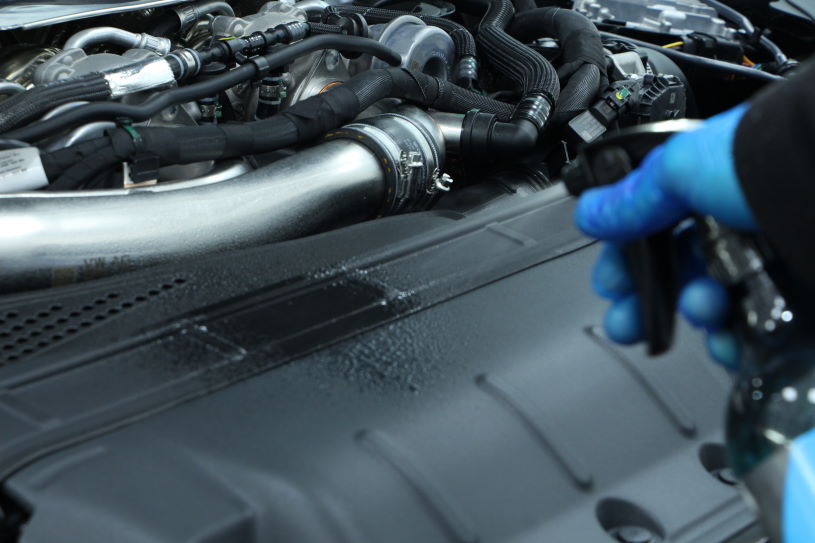
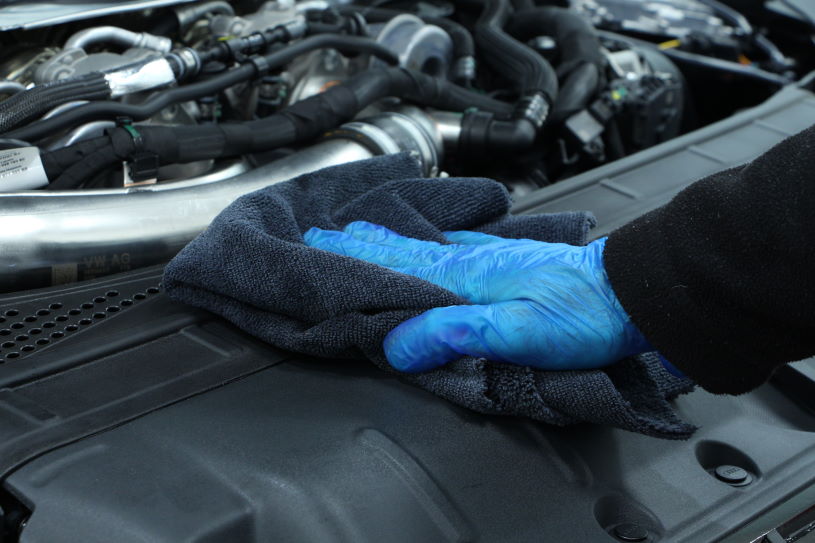
DLux is therefore perfectly suited for treating your plastics and hoses as it has a very high temperature resistance. In addition to being usable on plastics and rubbers, DLux can also treat wheels and brake calipers thanks to this characteristic.
Place a few drops of product on the suede applicator included in the kit, and apply to all your plastics, seals, and hoses. DLux is a ceramic-based (SiO2) product with a fairly rich texture.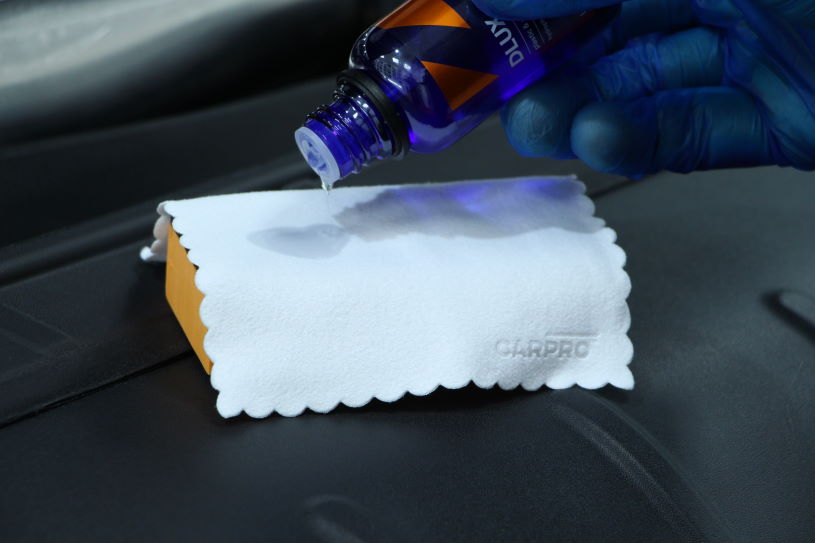
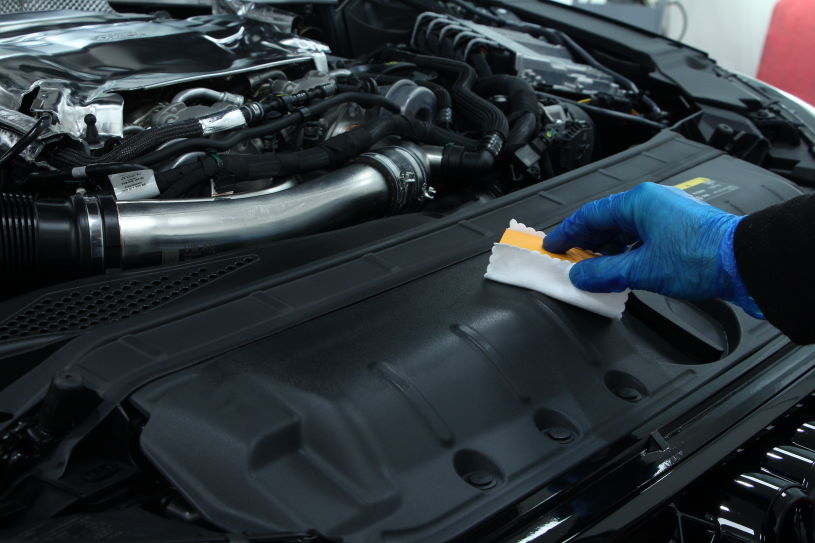
At first, you will likely find the treated surfaces a bit too shiny and greasy-looking, but this is perfectly normal. Simply wipe everything off with a microfibre cloth after a few seconds of dwell time.
On a new or recent engine bay, DLux will not act as a repigmenting agent on synthetic materials (it is not intended for that purpose), but will provide a protective role.
A gain in the satin finish it leaves can also be observed — quite elegant without being too flashy (see the 50/50 photo below).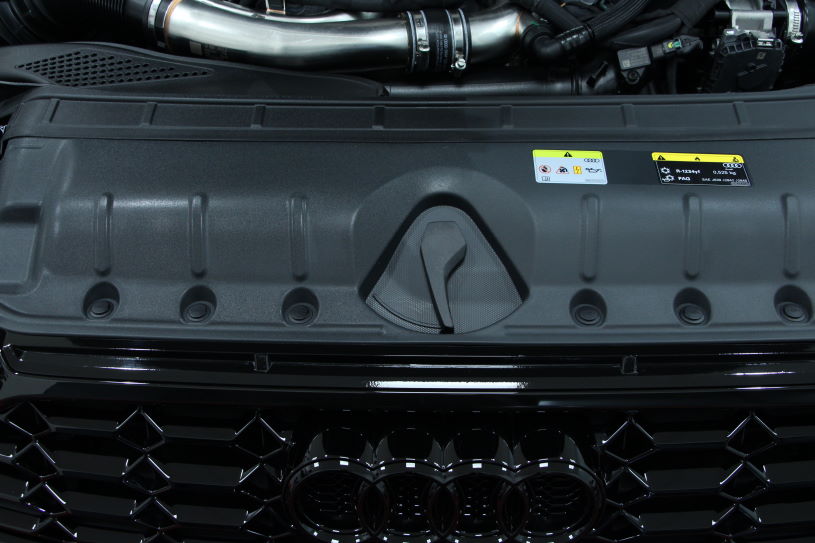
Repeat the treatment on all elastomer materials, which are very sensitive to temperature rises.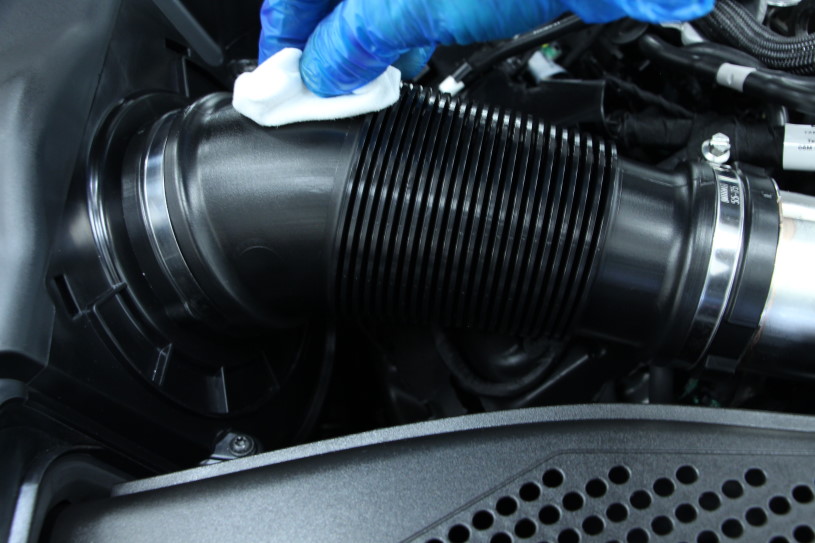
The advantage of DLux, as mentioned previously, is its versatility of use. The ability to use it on wheels and brake calipers is a major plus. Furthermore, you will notice that the finish left by DLux on painted wheels is very impressive in terms of gloss as well as wet effect. The aluminium grey comes out very "wet".
Highly recommended!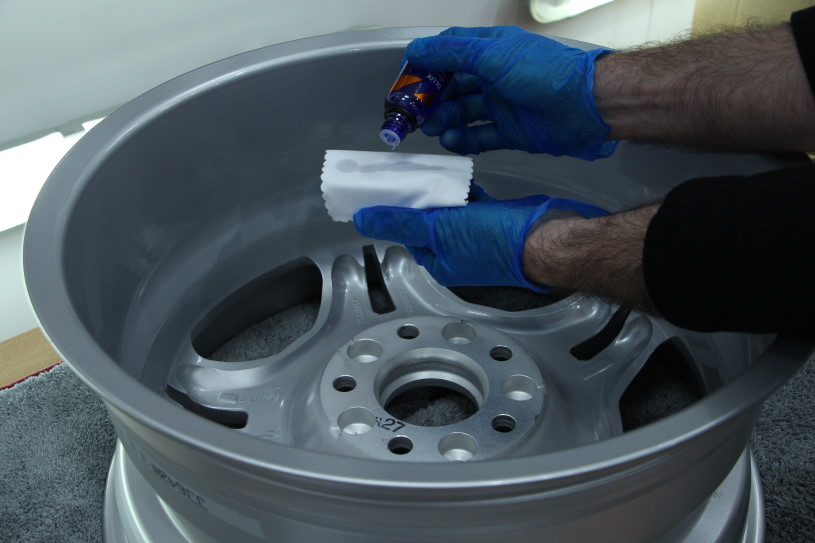
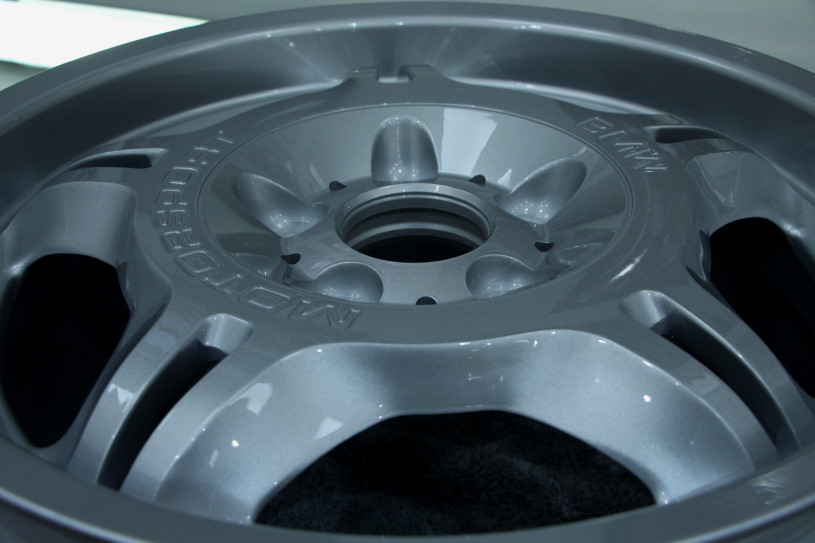
Ultimately, DLux proves to be an excellent reference from the CARPRO brand. We had already been able to test its effectiveness on the repigmentation of exterior plastics in particular, in the past. Here, in a protection phase for an engine bay, DLux will once again be right at home. Perfect for treating virtually all surfaces, the composition of this product (ceramic) will allow for very durable and resistant protection on this heavily stressed area.
Another possible treatment point in the engine bay: painted surfaces (visible body panels and/or painted engine cover). In our case, we were dealing with a genuine carbon engine cover that had been poorly (very poorly) polished at the factory. The result: a haze of holograms to correct.
It is possible and highly advisable to polish these surfaces.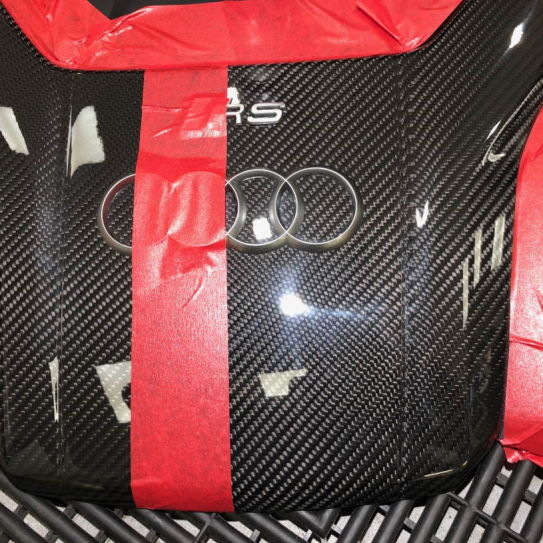
To correct this type of defect, you can use finishing polishes. In our case, we chose to use Q2 Primer for two reasons. The first is its ability to correct these defects easily while leaving a brilliant finish on this type of surface. The second is that it helps promote the bonding of the ceramic coating we will apply to the surfaces afterwards.
This polish can be used by hand or by machine for greater efficiency. With a fairly liquid texture and a long working time, the finish is truly exceptional, as is its ease of wiping and the feel it leaves. It also leaves a thin ceramic layer.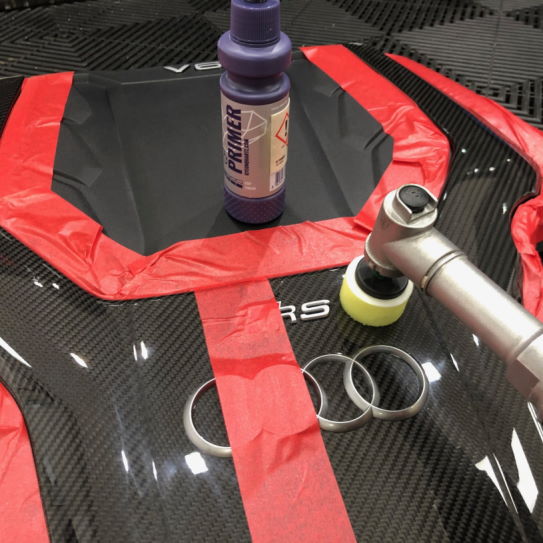
The hologram haze on the engine cover disappears effortlessly, and the carbon weave comes through superbly.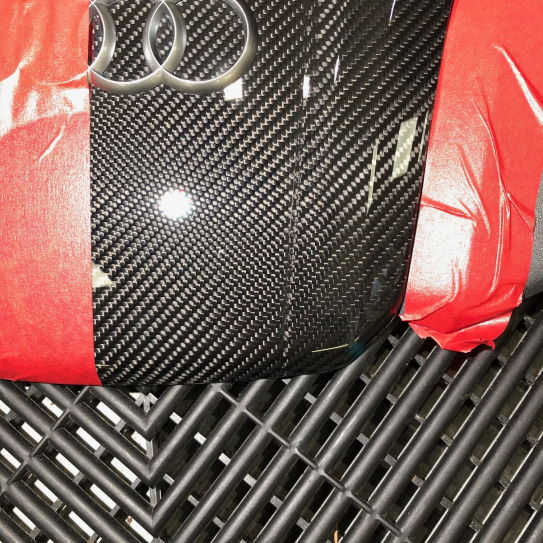
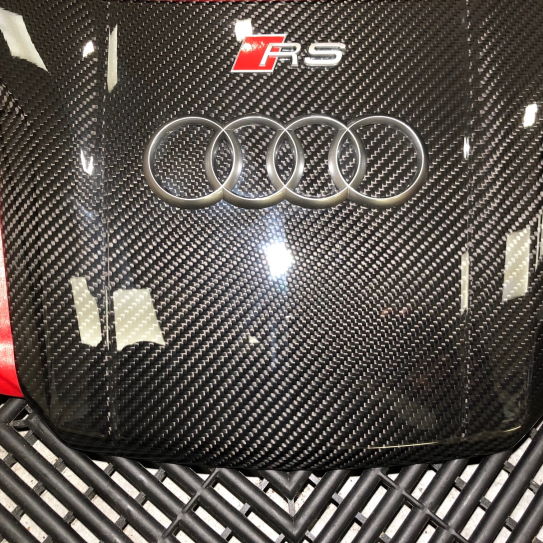
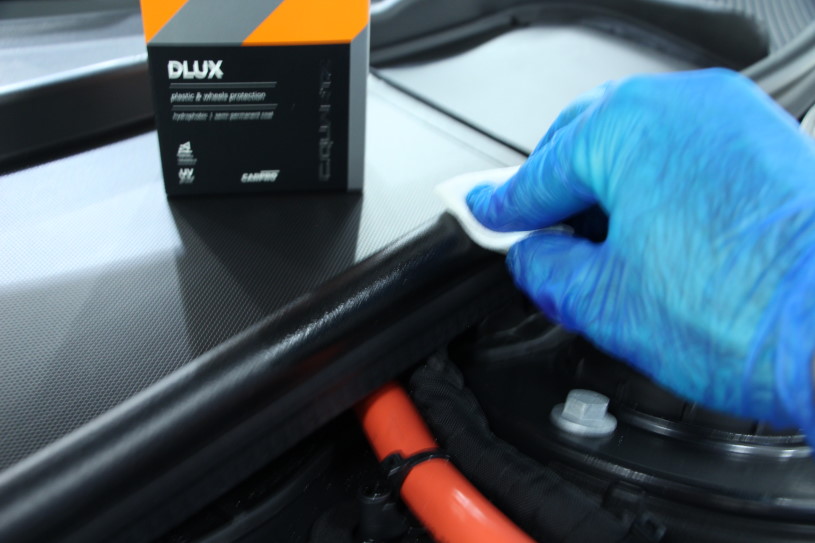
Once polishing is complete, make sure once again to thoroughly degrease the surfaces and then apply a ceramic protection with good temperature resistance. We chose the model from FICTECH: Car Lift Crystal. We also took the opportunity to treat the bare plastic parts of the cover with DLux as described above.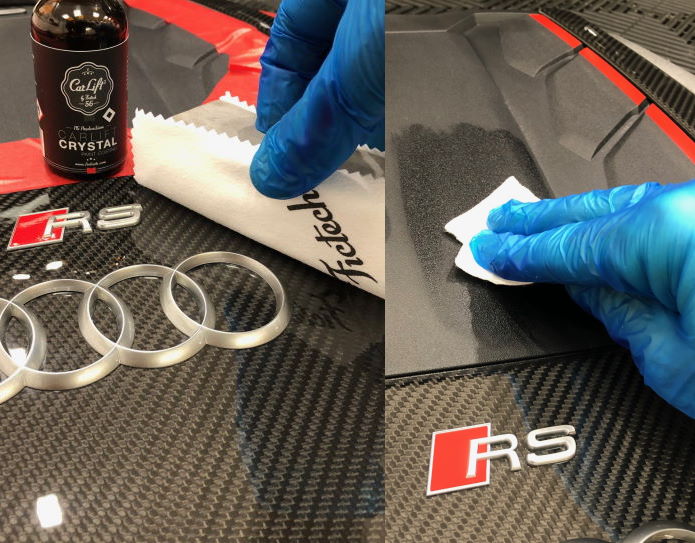
Car Lift Crystal is a very interesting ceramic treatment as it can be used on all painted surfaces, is very easy to apply and wipe off, and finally has a very good temperature resistance (admittedly lower than DLux or other wheel ceramic coatings).
Treated in this way, the engine cover comes out beautifully and can take its place back in the engine bay.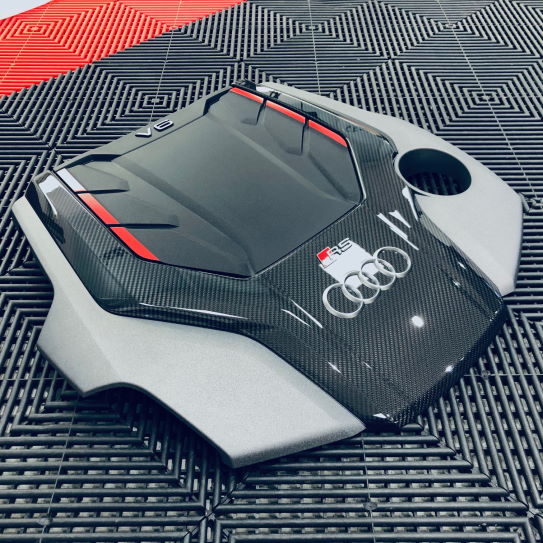
General conclusion:
Few people attach importance to treating the engine bay. Wrongly so, because these are often important parts — even critical to the proper functioning of the engine (hoses in particular). Rigorous care is therefore necessary to keep these parts lasting as long as possible.
We have seen DLux from CARPRO. A reference product, then, that will allow you to treat many parts with low product consumption. Furthermore, its versatility of use will save you from having to buy several products (one ceramic product for plastics, another for wheels, etc.)
Next, Q2 Primer. An excellent reference from the GYEON brand that will draw the maximum gloss from all your painted surfaces. Recommended before applying a ceramic coating as well, or on delicate varnishes requiring easy wiping. We had also written an article about this product (an article covering GYEON polishes).
Finally, the FICTECH Car Lift ceramic. Another reference among references. Usable on all painted surfaces, its improved temperature resistance (600°C) will allow application on engine bay parts just as on wheels, exhausts, etc.
Do not neglect your engine bay — treat it if possible even on a new vehicle. Both for the essential protection aspect and for the visual aspect too. It is always a pleasure to admire a beautiful engine bay, all gleaming, is it not? ...