Express 24h delivery for orders placed before 1pm
- Promotions
- Kits
- Washing
-
Rim & Tire
Rim & Tire - Sale
- New
-
Decontamination
Decontamination - Sale
- New
-
Correction & Polishing
Correction & Polishing - Sale
- New
- Protection
- Interior
-
Windows
Windows - Sale
- New
-
Accessories
Accessories - Sale
- New
- Others
- Professional products
- Brands
- My pro area
- Wishlist
- Blog
Comparison - Different Decontamination Solutions
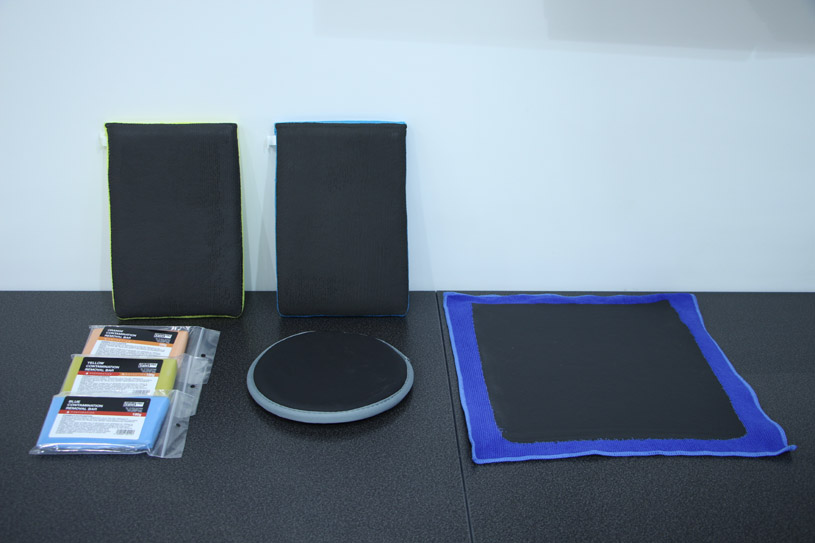
- Products: Clay Bars, Polyshave Cloth, Polyshave Decon Pad, Cleansing Mitt.
- Manufacturers: VALET PRO, CARPRO, CHEMICAL GUYS.
- Packaging: Sold individually.
Test overview: The purpose of this presentation is to outline the different solutions for carrying out one of the most important steps in Detailing: decontamination.
A decisive step for being able to polish effectively afterwards, decontamination can be performed using Clay Bars (clay bars) which have existed for years, or through new processes recently introduced to the Detailing world.
Towels, mitts or even decontamination pads — manufacturers regularly innovate to offer both private individuals and professionals the solution that will suit them best.
Traditional Clay Bars:
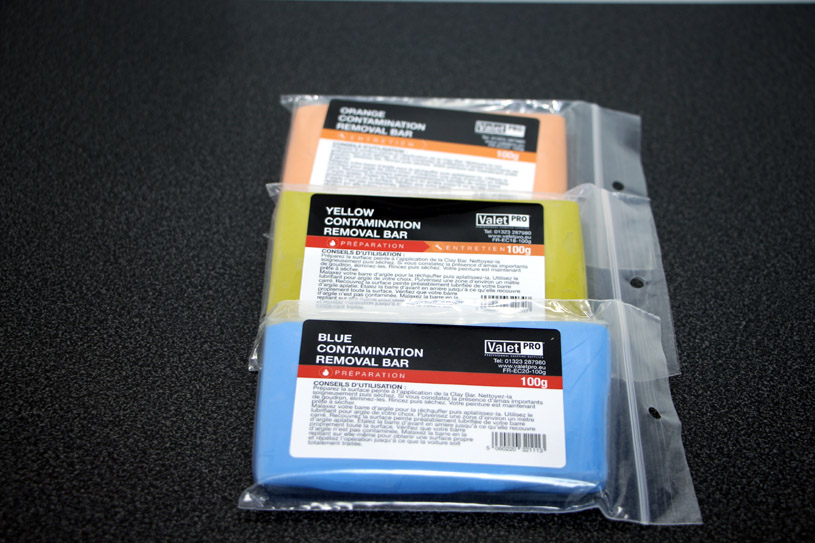
The Clay Bar (decontamination rubber) presented in the form of a rectangular block in various weights is the solution that everyone knows, having existed for decades with certain brands.
There are different grades of clay depending on the level of contamination of the car to be treated: fine (recent to new vehicles), medium (vehicles a few years old) or heavy (barn-find vehicles or heavily contaminated ones).
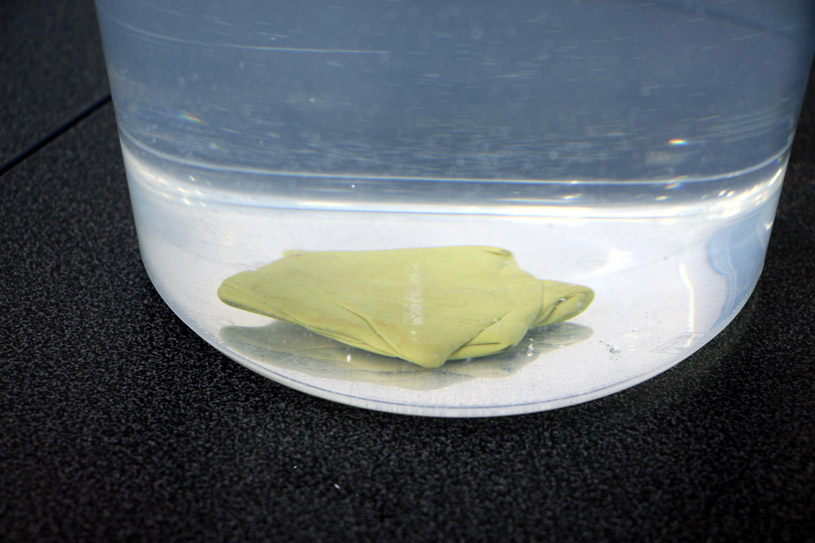
If your clay is too hard (especially the Hard grades), dip them in a container filled with warm water for a few moments to soften them.
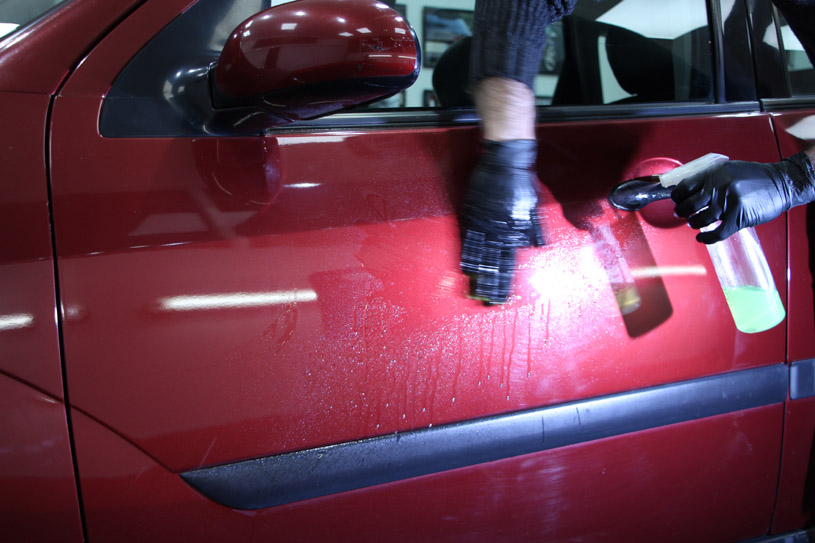
The use of manual clay is fairly simple in principle, but its small size only allows work on small areas at a time. As a result, decontamination can take a lot of time, especially in the case of heavily contaminated vehicles requiring multiple passes.
Another drawback of clay is that it must be kneaded to recreate two clean, contaminant-free sides once too many contaminants appear on the surface. This can prove quite tedious over time, especially with hard clays.
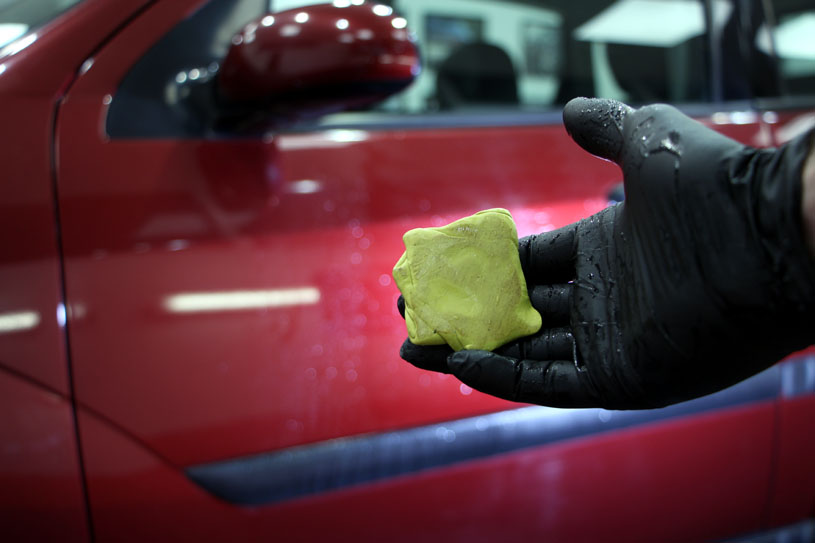
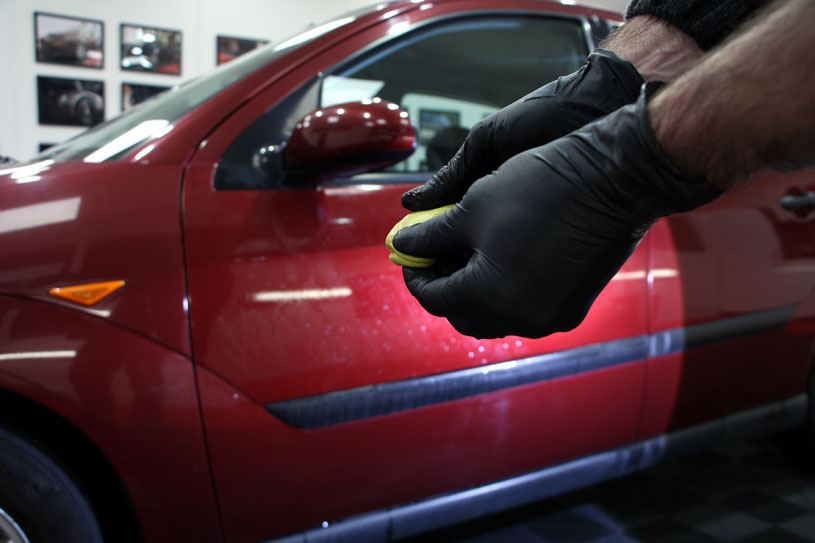
On the other hand, the undeniable advantage of a clay bar is that it can reach everywhere, including narrow spaces where other decontamination solutions cannot go. We will see this later on.
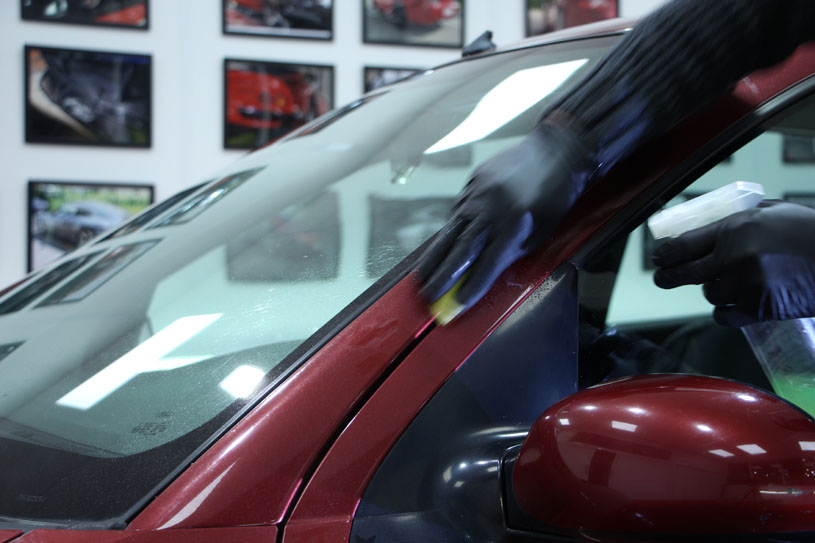
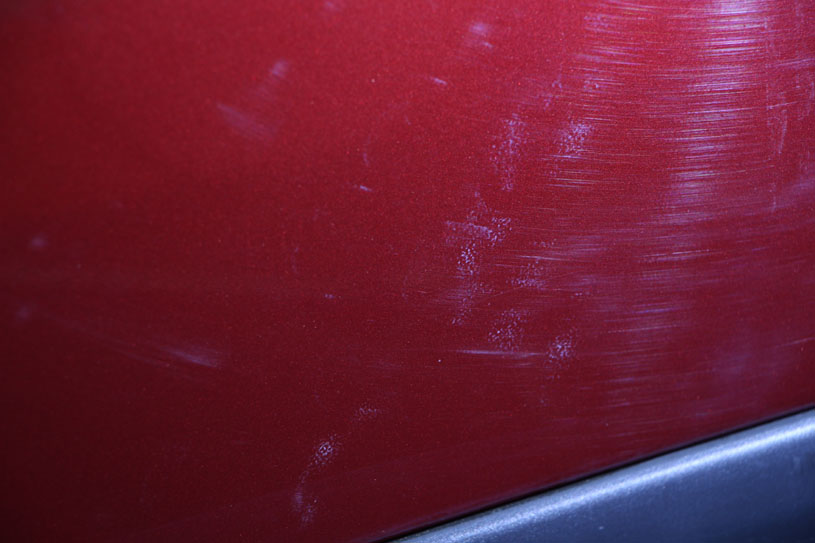
Be particularly careful with Medium to Hard clays — they can create defects known as "clay marring", a kind of very fine sanding marks, as every clay (including fine ones) contains mild abrasives that strip the clearcoat bare. This phenomenon also occurs almost systematically on repainted panels.
It is therefore essential to follow up with a correction pass, even a light one, using a polish.
Decontamination mitt:
The decontamination mitt (Cleansing Mitt) has been on the Detailing market for several years now. Decontamination is performed on a single coated side. Like traditional clay bars, there are several grades of mitts, ranging from light to hard depending on the level of contamination of the car to be treated.
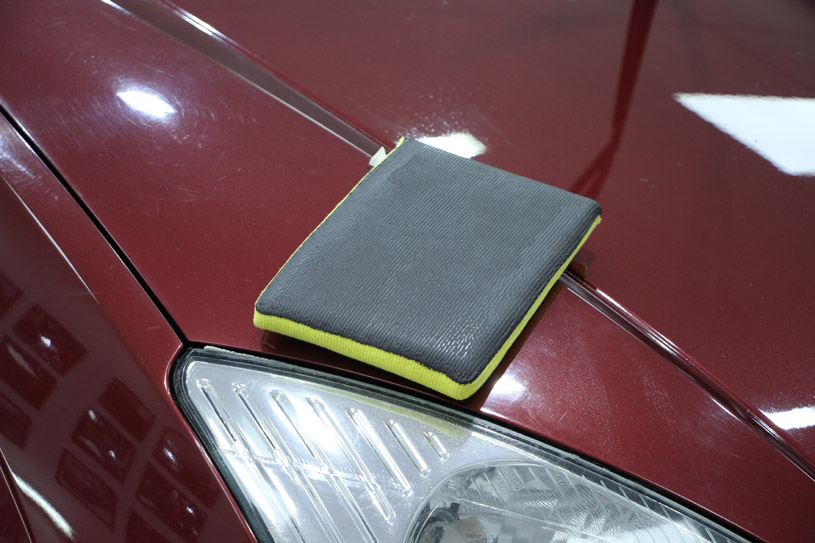
Before first use, use the decontamination mitt on the windshield or any other glass surface to "break it in" before using it on the paintwork.
The advantage of using a mitt over a clay bar is that you can apply the mitt directly after the washing and rinsing step while the paintwork is still wet. Dip the mitt in the wash bucket with the remaining soapy water and decontaminate directly, optionally aided by a clay lubricant.
Alternatively, you can use the mitt once your vehicle has been dried by applying clay lubricant generously to the surface.
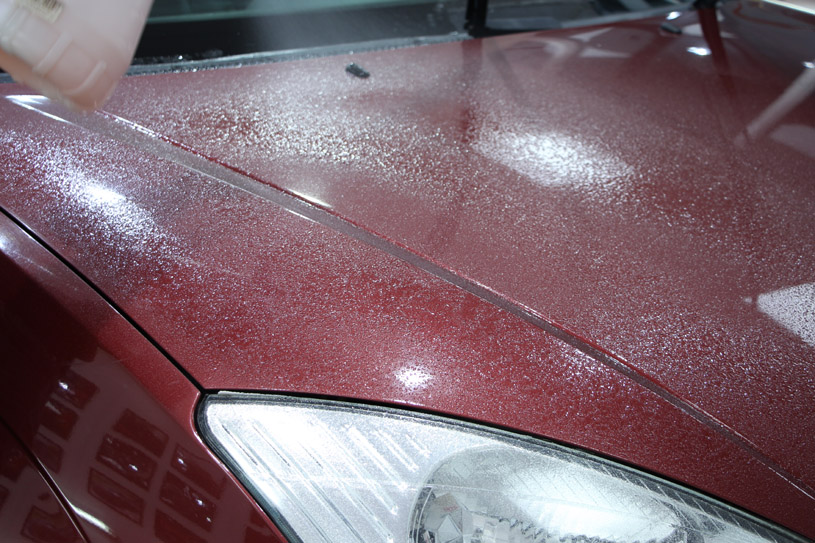
Work in straight back-and-forth strokes with crossed passes, using moderate pressure, until the mitt glides freely on its own without resistance.
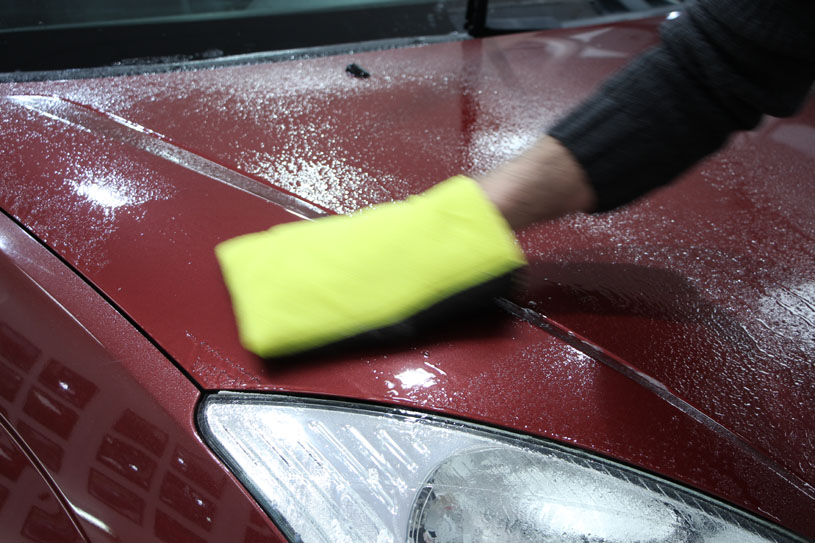
You can use the mitt on glass, your paintwork of course, but also on polycarbonate headlight lenses. Only bare plastic parts (ABS etc.) and rubber parts (seals) should be avoided.
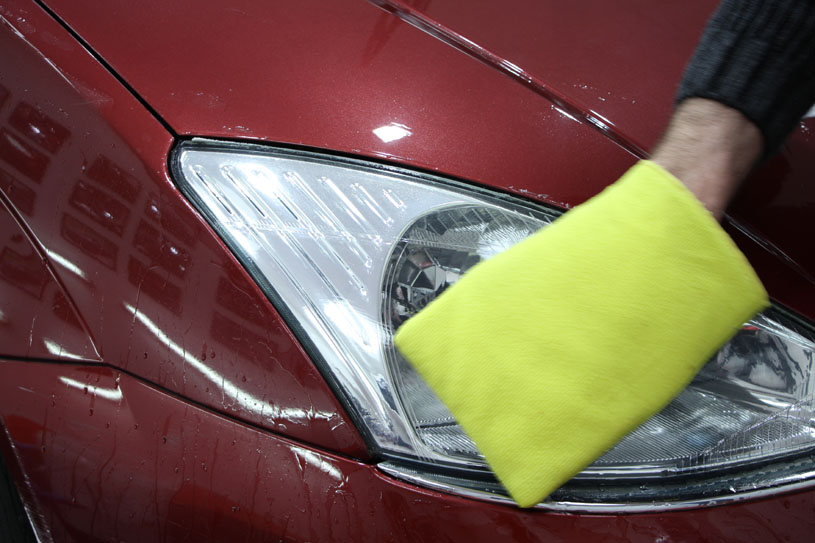
After each decontaminated element, make sure to dip your mitt in soapy water to clean it thoroughly on the surface.
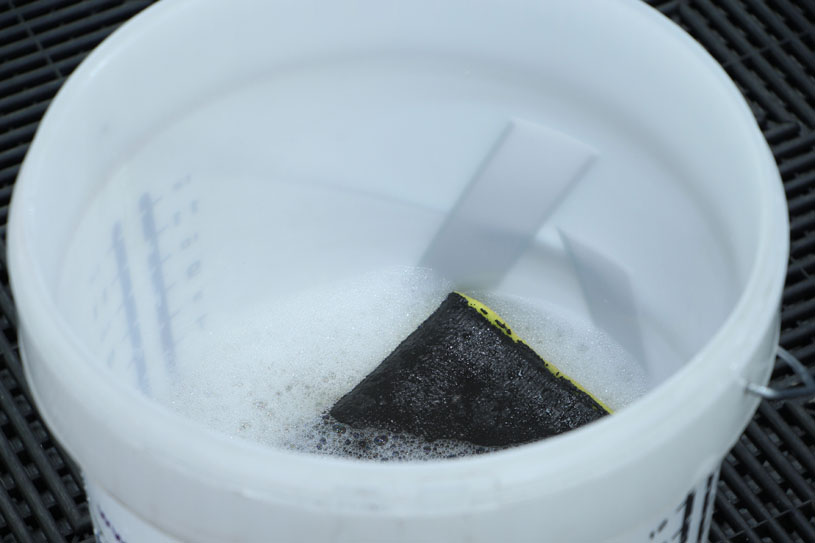
You may notice that the decontamination mitt is even more likely to leave swirl marks (clay-marring), particularly on repainted panels.
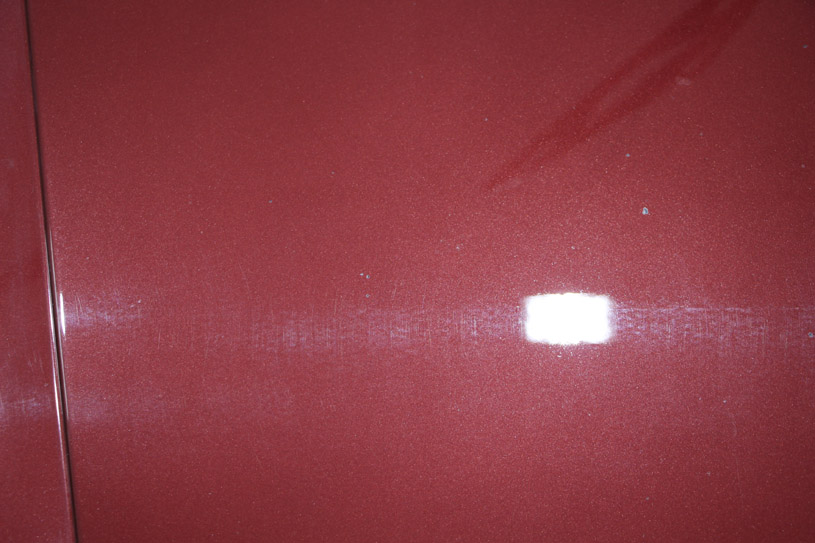
Ultimately, the mitt proves to be an extremely simple tool to use, saving time compared to a conventional clay bar but not allowing access to very tight spots, unlike a clay bar which is more versatile in this respect.
Another point to note is the high price of decontamination mitts. Expect around fifty euros for these compared to barely €10 for a traditional clay bar. Thus, a mitt will appeal more to a professional looking to save time and performing decontaminations regularly rather than to a private individual simply wanting to decontaminate their own car, who will therefore find it harder to justify the cost of the mitts.
Polyshave Cloth:
Fairly new to the Detailing world, the Polyshave Cloth, or decontamination towel, shares the same characteristics as the decontamination mitt but in towel format (40x40).
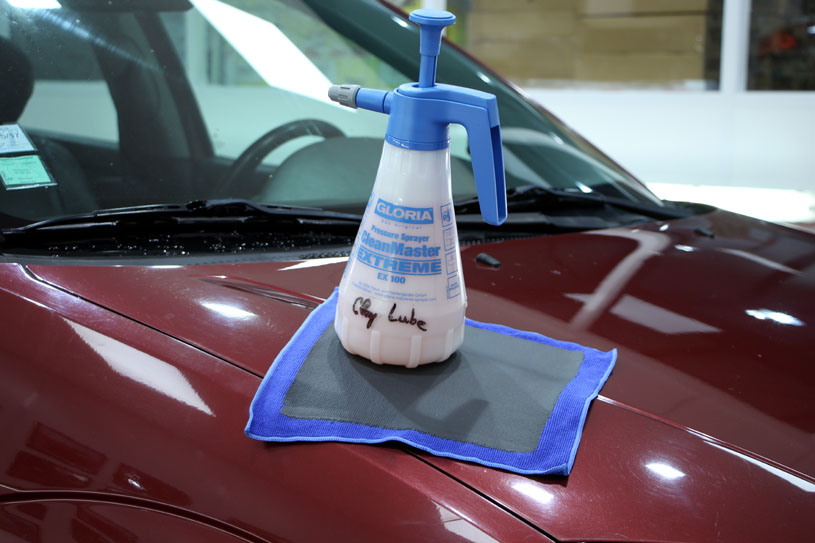
Same usage as the mitt — dip it in a bucket filled with soapy water or use it directly after your wash and rinse. Always make sure to use it on glass before using it for the first time.
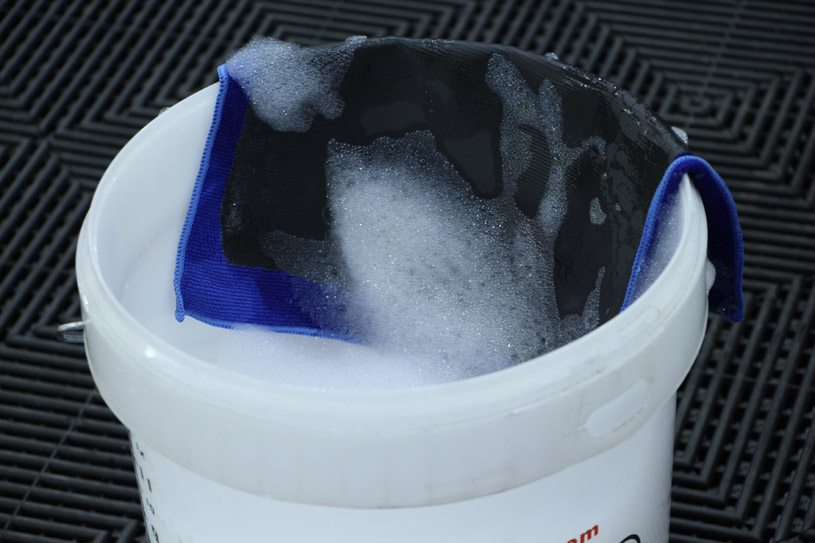
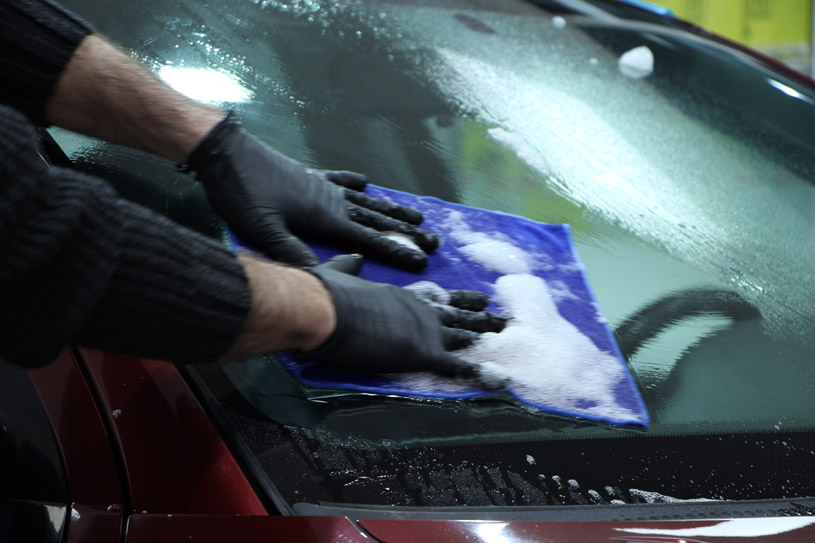
The major advantage of the decontamination towel is its usable surface area (more than double that of a mitt). A clear time-saver on large surfaces.
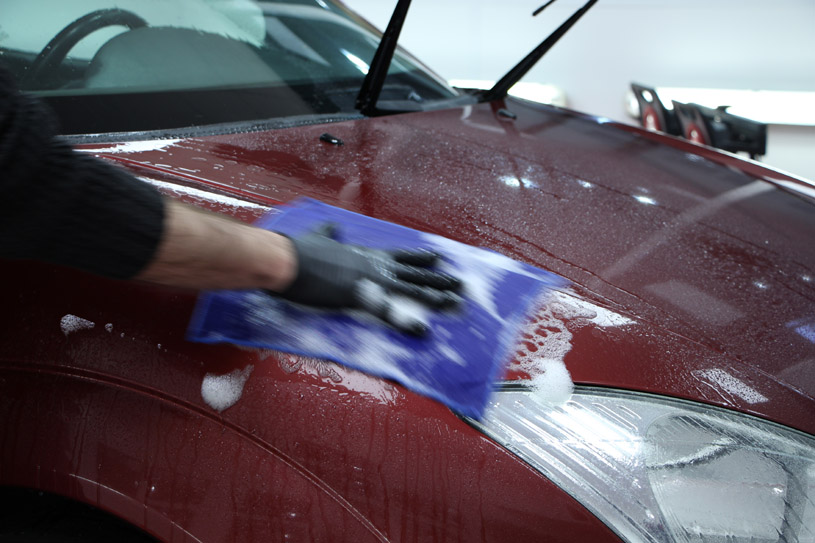
However, be careful not to drop the towel on the ground as there is no grip compared to a mitt. Thus, on tacky surfaces (heavily contaminated) it is easy to let the towel slip away.
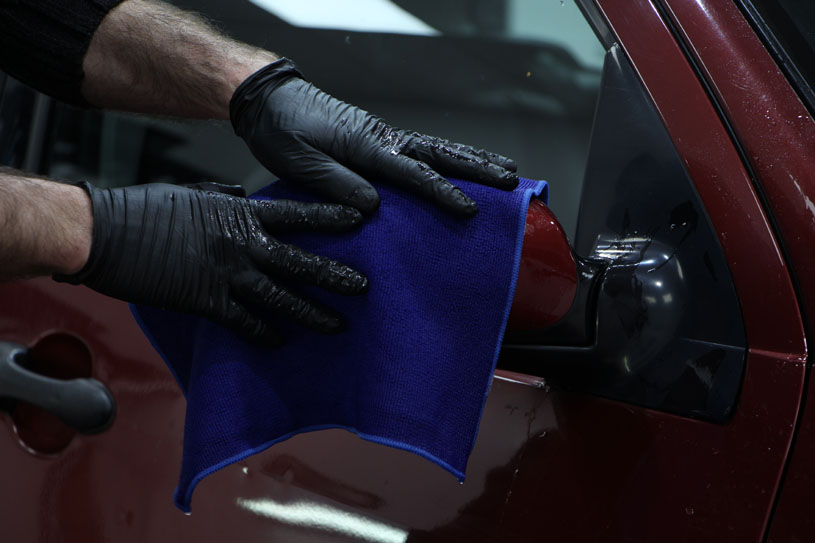
Similarly, it is difficult to reach tight spots such as bumpers and windshield pillars with the towel, compared to traditional clay bars.
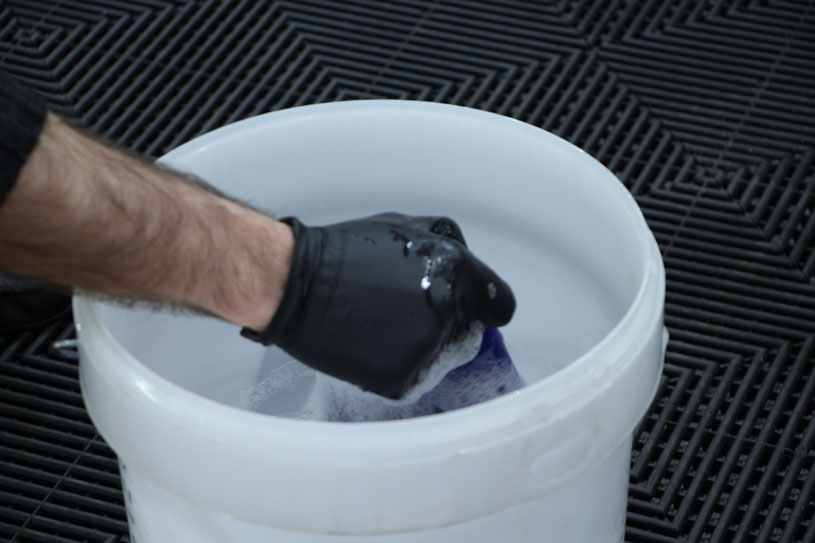
Just as with mitts, the towel should be cleaned regularly to remove surface impurities. To do so, dip it in your bucket of soapy water.
Ultimately, the Polyshave Cloth proves practical in that it saves a considerable amount of time on large areas with very good efficiency, but presents the same drawbacks as the mitt (access to tight areas, high price). A solution once again better suited to professional use than to private individuals in our opinion.
Decontamination pad ("Polyshave Decon Pad"):
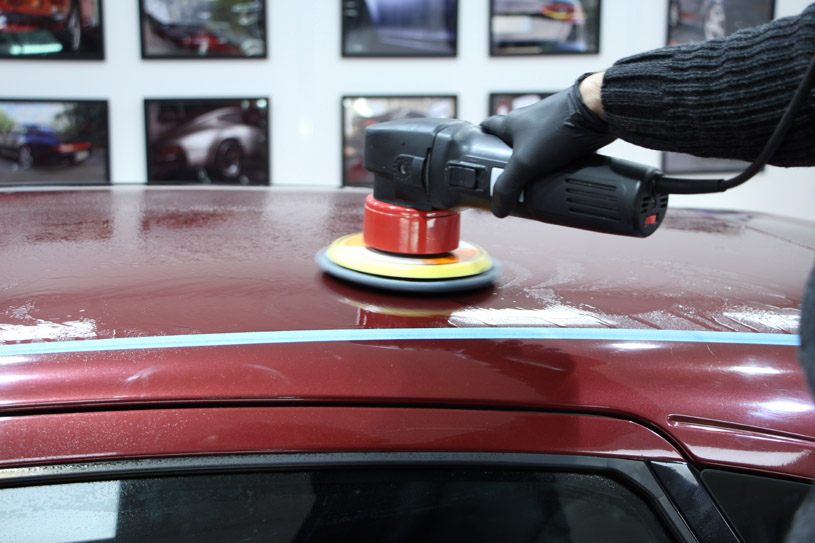
The latest addition, the decontamination pad. A fairly widespread solution in the United States, it allows the decontamination step to be carried out with a polisher (orbital) for even greater speed and ease. The pad attaches to a 6-inch backing plate thanks to the velcro on its reverse side.
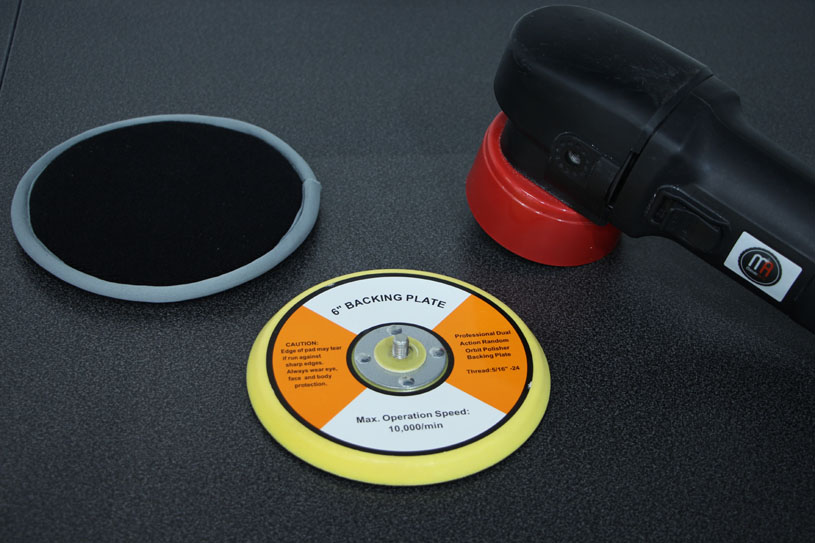
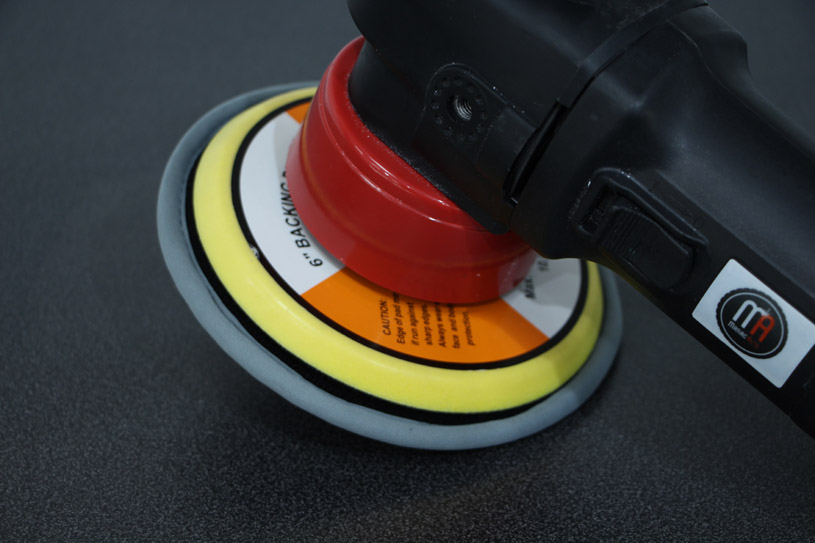
Just as with decontamination mitts and towels, before the very first use you should dip your pad in water and use it on glass to "break it in" before using it on the paintwork.
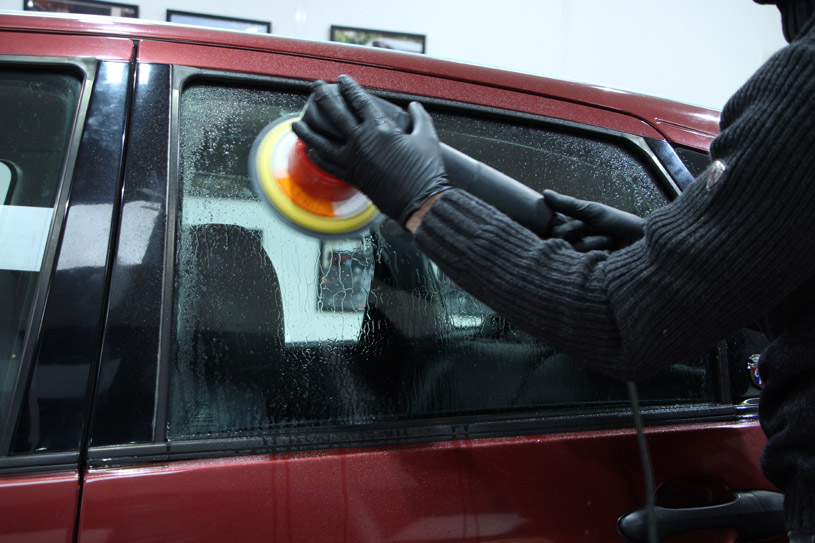
The Decon Pad is worked at a slow speed on the orbital (speeds 2–3), in crossed straight passes, in the same way as a polish. Do not apply too much pressure to avoid creating too many defects.
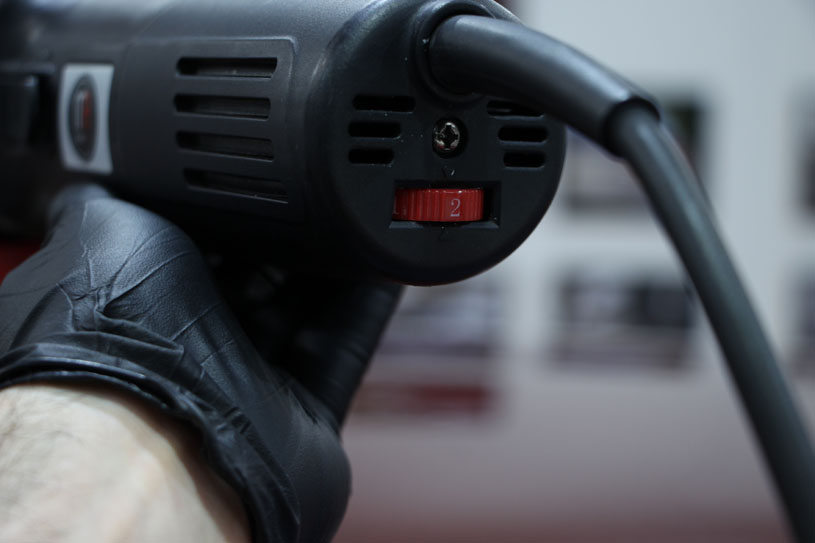
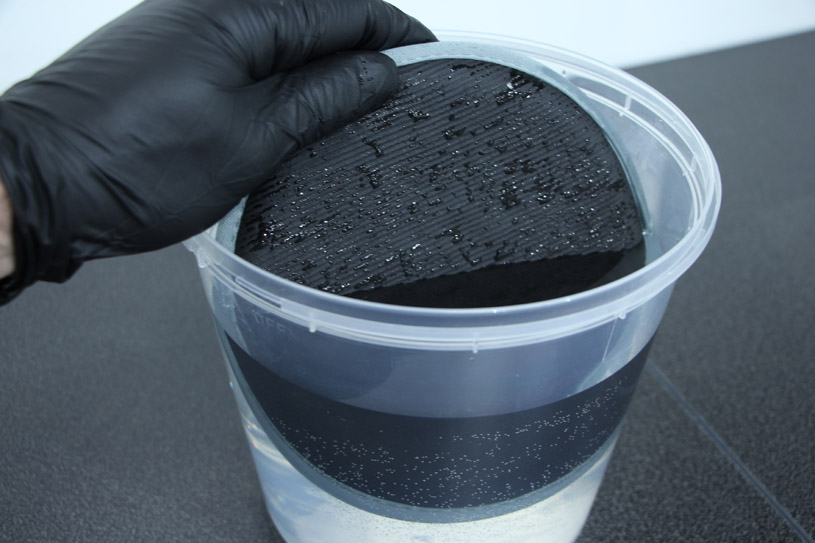
After each treated panel, dip your pad in water to rinse it and dry it quickly.
This fairly innovative decontamination solution has the advantage of being fast and quite effective while avoiding any fatigue.
Nevertheless, the issue of access on small areas remains (tricky with a 6-inch pad...). Its fairly affordable price and significant durability make it a good choice for any professional looking to save time.
General conclusion:
After reviewing the various ways to decontaminate a car, we realize that ultimately the Detailer's choice will depend on their usage (personal or professional) and that the choice will not be a single one. Indeed, in our view, a mitt, a towel or a pad should be used for large areas to save time, but a clay bar will still be indispensable for hard-to-reach areas.
There remains the question of price. A factor of 2 to 5 depending on the accessories chosen, which must be taken into account based on the number of cars to be treated. Also, mitts and towels are very durable if well maintained, whereas a traditional clay bar remains a consumable...
Finally, the decontamination pad will need to be used with a polisher, and therefore requires access to a power outlet, which is not necessarily convenient for every amateur detailer who does not have a dedicated workspace...