Express 24h delivery for orders placed before 1pm
- Promotions
- Kits
- Washing
-
Rim & Tire
Rim & Tire - Sale
- New
-
Decontamination
Decontamination - Sale
- New
-
Correction & Polishing
Correction & Polishing - Sale
- New
- Protection
- Interior
-
Windows
Windows - Sale
- New
-
Accessories
Accessories - Sale
- New
- Others
- Professional products
- Brands
- My pro area
- Wishlist
- Blog
CARPRO Perl
- Product: Perl.
- Manufacturer: CARPRO.
- Packaging: 500ml, 1L or 4L.
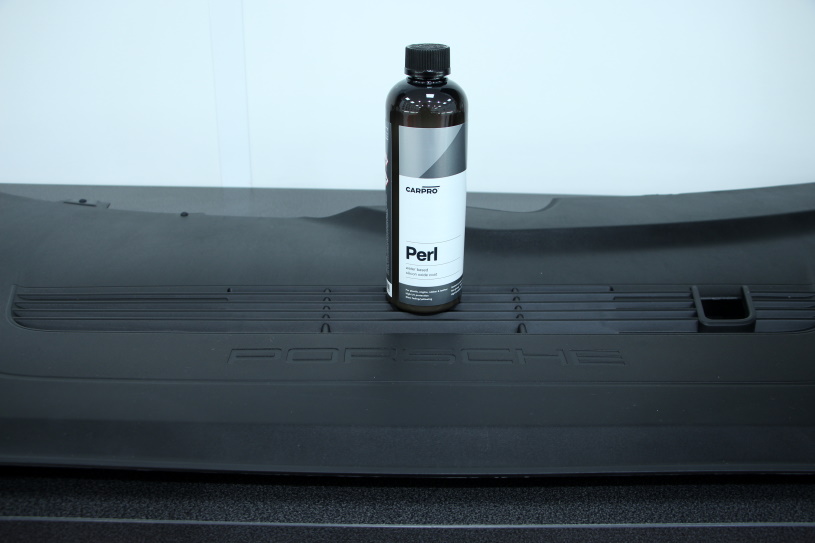
CARPRO is a well-known brand for its multi-surface ceramic treatments. Yet, few people know Perl, the brand's plastic and tire dressing, which is nonetheless a very interesting product thanks to its versatility, its variable finish depending on dilution, and above all its durability.
We test Perl for you on various surfaces to discover its possibilities.
Dilution:
Perl is a product that needs to be diluted. It can be used neat, but only for a specific use that we will cover later, or for those who prefer a glossy finish.
The dilutions generally used for Perl are as follows:
- Exterior plastics: 1:3
- Interior plastics: 1:5
- Tires/seals/engine hoses: 1:1 or neat.
Of course, everyone is free to choose and adapt the dilution according to their preferences.
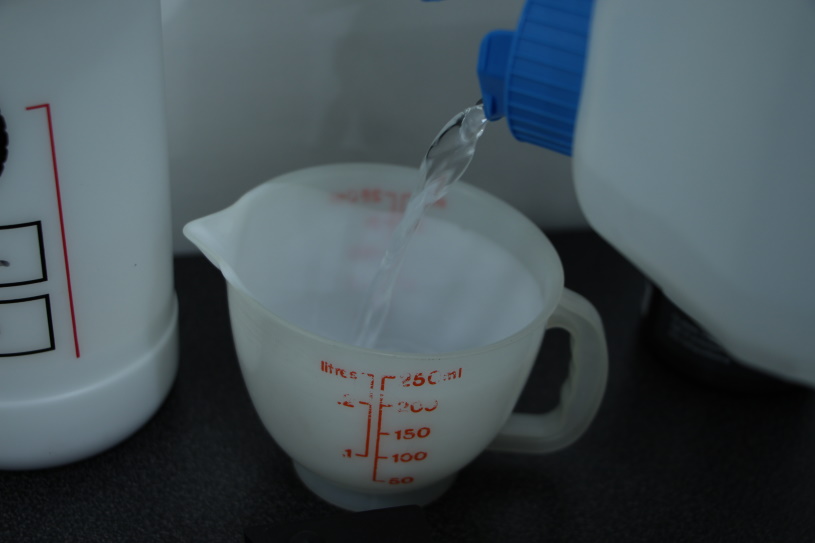
However, we recommend diluting Perl with demineralized water. For example, pour 200ml of product into a dilution bottle and then top up with 600ml of demineralized water (1:3 dilution). It is preferable to carry out the dilution in this order, as Perl is quite viscous when neat, and adding the water afterwards allows you to rinse your container properly and thus dilute Perl perfectly.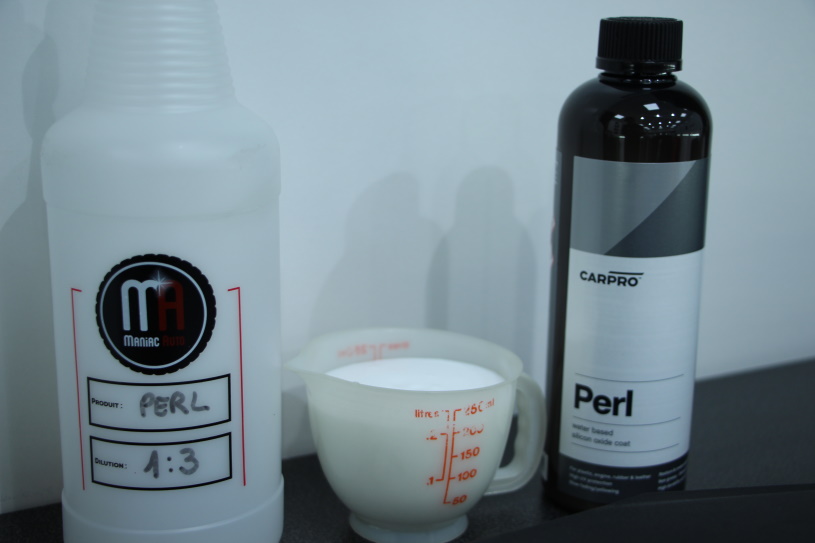
Usage:
Next, you will need to thoroughly clean and degrease the surfaces to be treated as always. Use an APC or a degreaser diluted according to intended use. Scrub well with a microfiber cloth or optionally a brush to achieve a clean and above all thoroughly dry surface.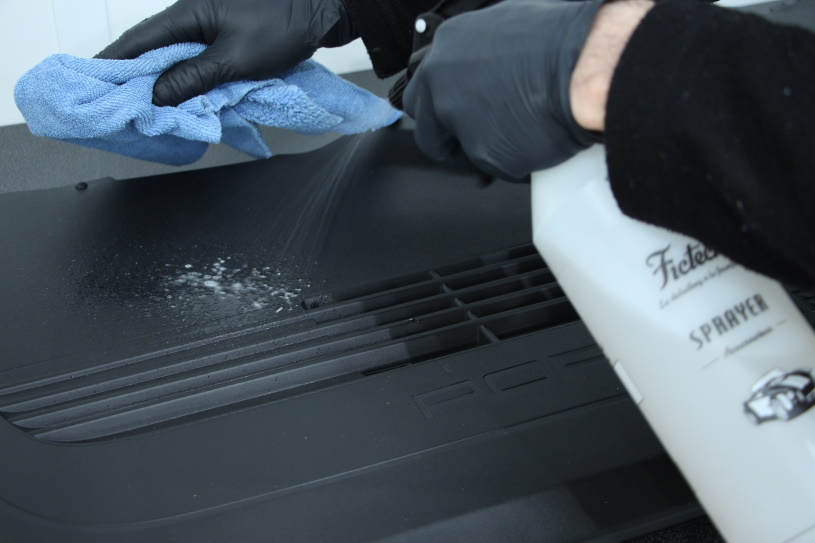
Perl can be applied in different ways: either by direct spray onto the surface, or using an applicator (foam or microfiber). Our preference goes to the microfiber applicator, which absorbs less than its foam counterpart.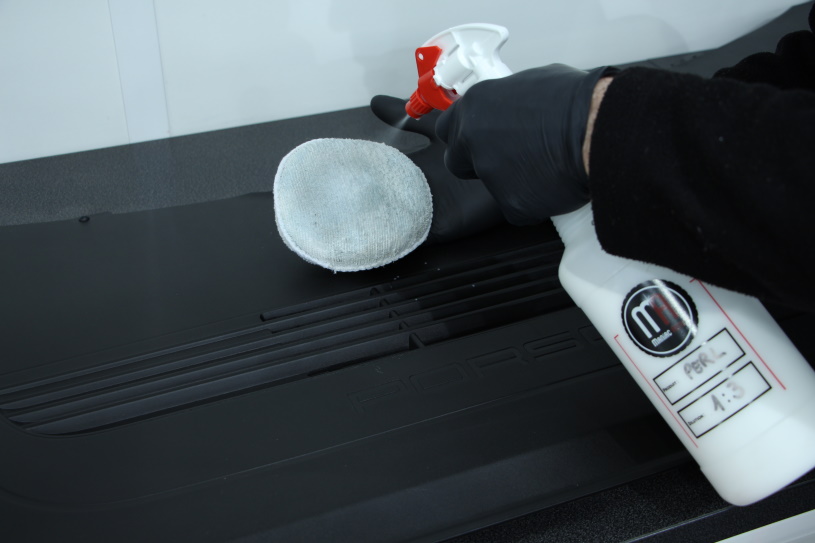
Once diluted (here at 1:3), Perl loses its fairly viscous consistency and spreads very easily. You also use less product. It is important to spread and work the product well across your surface.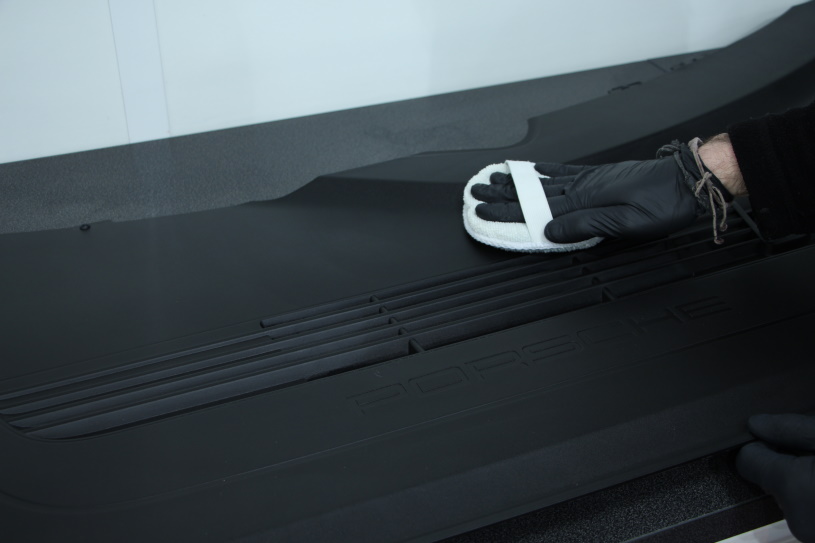
There is no real dwell time required. It is important however to wipe the product thoroughly with a microfiber cloth. Wiping is easy and no streaks or greasy residue are visible on the surface.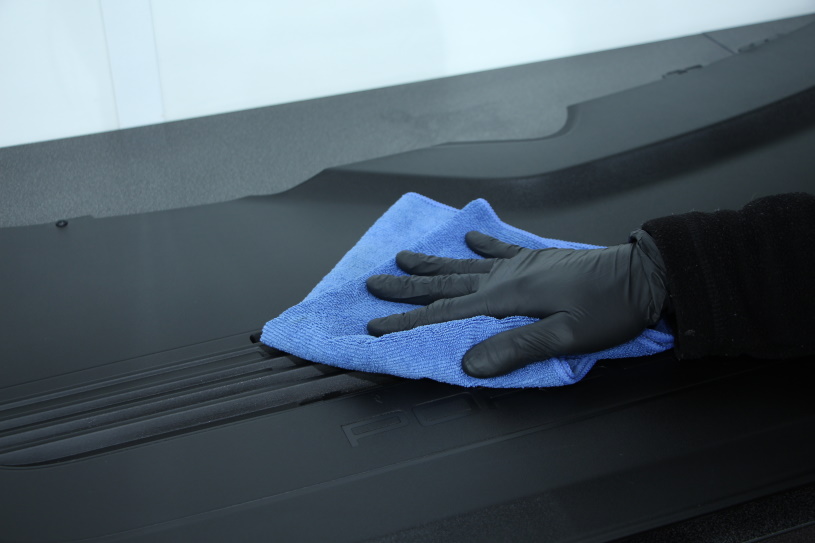
Perl's composition is partly silica-based (ceramic), making it a very dressing that is highly resistant to cleaning agents and quite durable (expect several weeks). At a 1:3 dilution, the finish is fairly pronounced, bordering on glossy on this raw plastic (ABS type). You can therefore dilute Perl a little more if needed (1:4 or 1:5).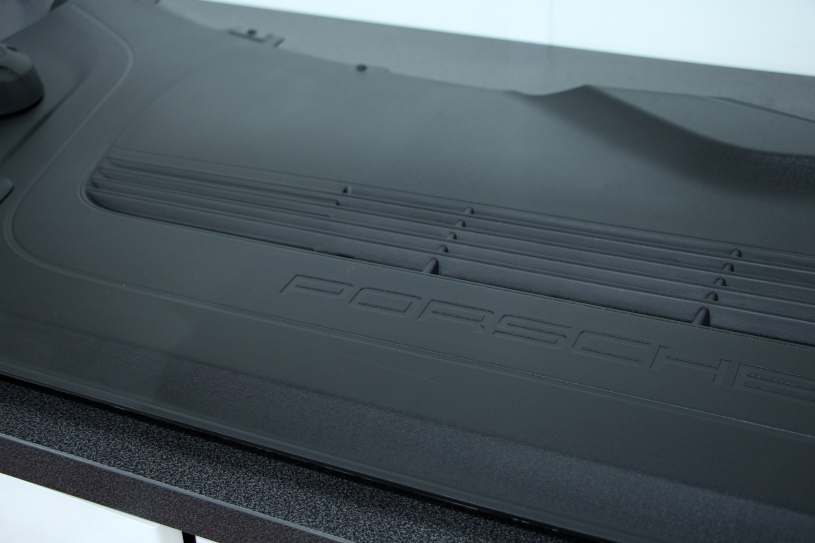
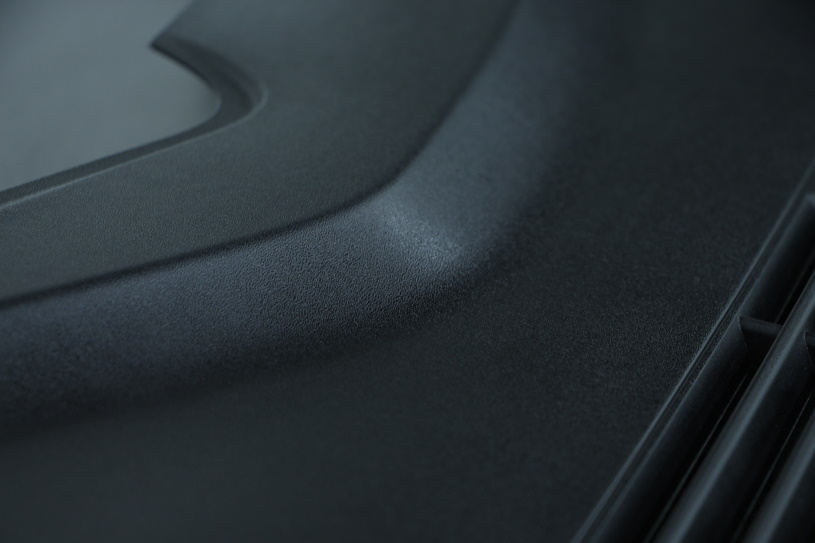
We repeated the test at 1:5 to see if the finish would be less pronounced and after wiping, it is better (still subjective). Everyone will ultimately decide on their own dilution. So, start at 1:3 while leaving some room in your dilution bottle to add more water to dilute further if the result does not suit you.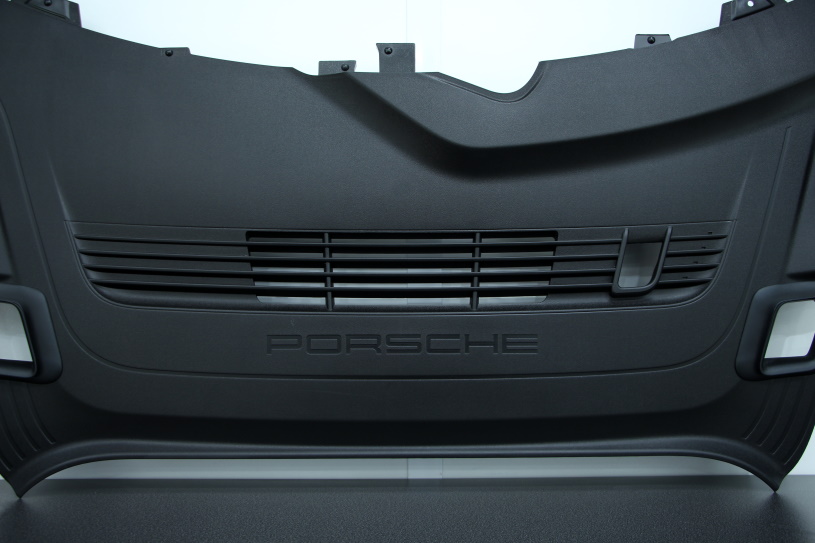
Above, the piece treated with Perl at 1:5.
Perl is a dressing you can use on all your raw exterior plastic surfaces (bumpers, spoilers, side skirts, grille inserts, etc.).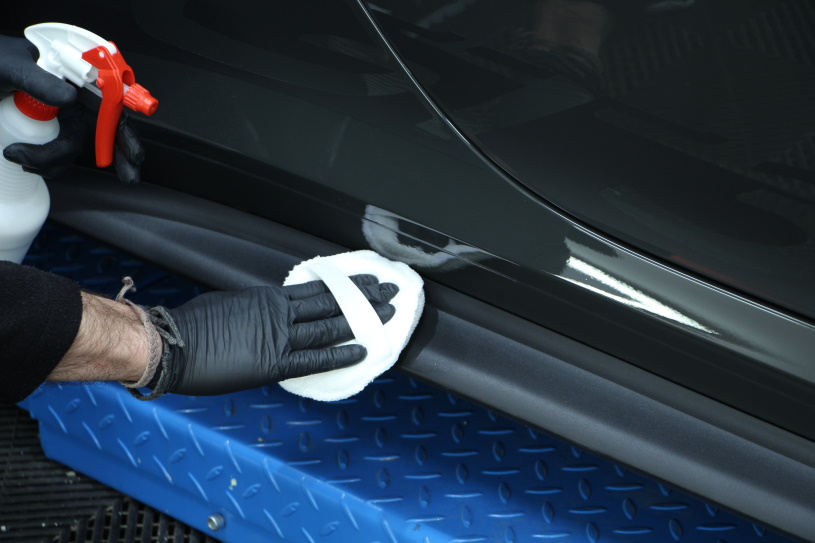
Another possible use of Perl on your vehicle: tires and other rubber materials (seals).
For this use and particularly for tires, you can use Perl neat or at a 1:1 dilution only.
Beforehand, make sure to thoroughly degrease your tire sidewalls before applying Perl. It is recommended to use a foam tire applicator, or a microfiber applicator if you prefer.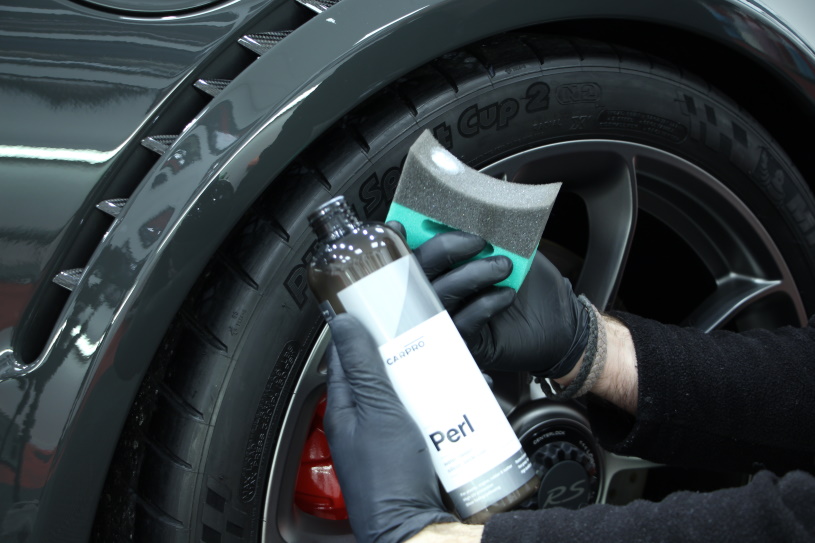
Neat, Perl is fairly greasy and you will need to spread it well across your tires so that the finish is not too glossy.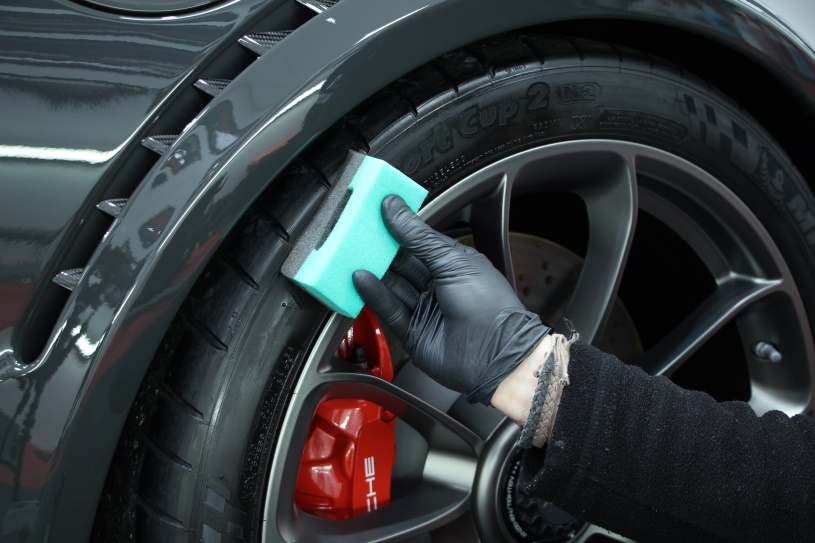
Note that the finishes of tire dressings vary greatly depending on the tire manufacturer. In this case, the test vehicle was fitted with Michelin Sport Cup 2 tires, which are very soft and absorb a large amount of product. It was therefore difficult to achieve a uniform finish.
We therefore recommend optionally applying a second very thin coat on the tire after the first coat has dried (approximately 1 hour).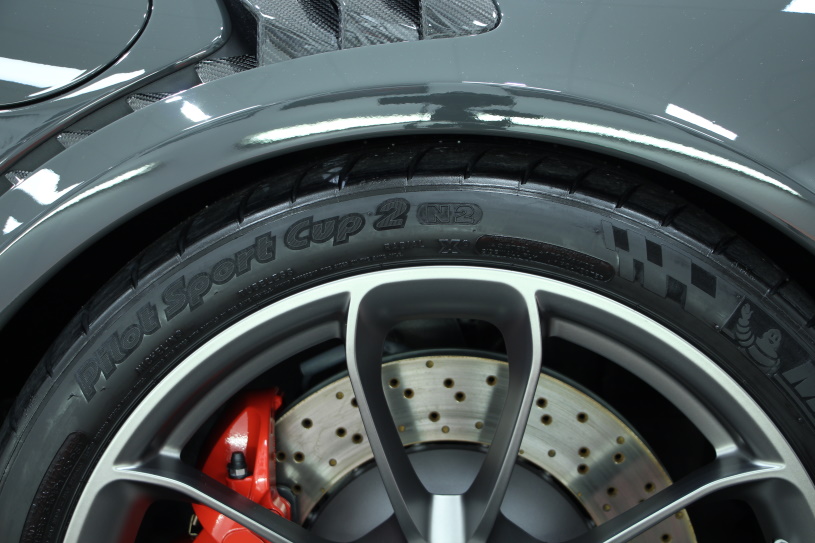
Perl will also be perfect for treating seals. To do so, use it neat or diluted at 1:1 as for tires, and then wipe the product off thoroughly.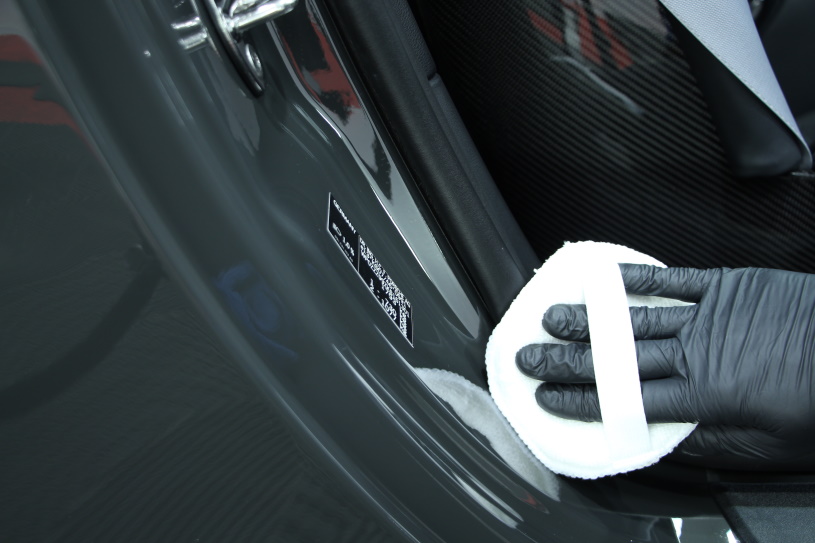
The look of Perl on interior plastics as well as the engine bay is truly superb (thanks to its high dilution of 1:5). It will leave just the right subtle touch to bring out the surfaces without being visually overwhelming.
In passing, Perl will be perfect for treating unvarnished matte carbon parts, such as the engine cover of this 911.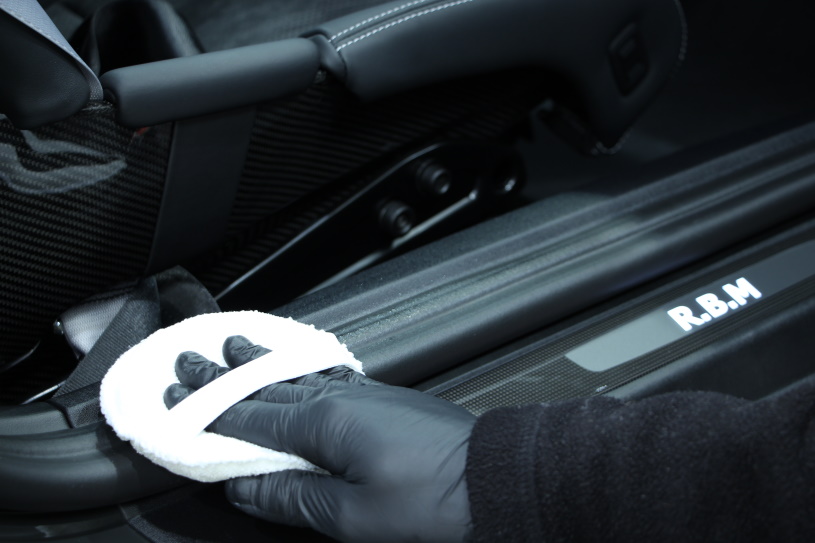
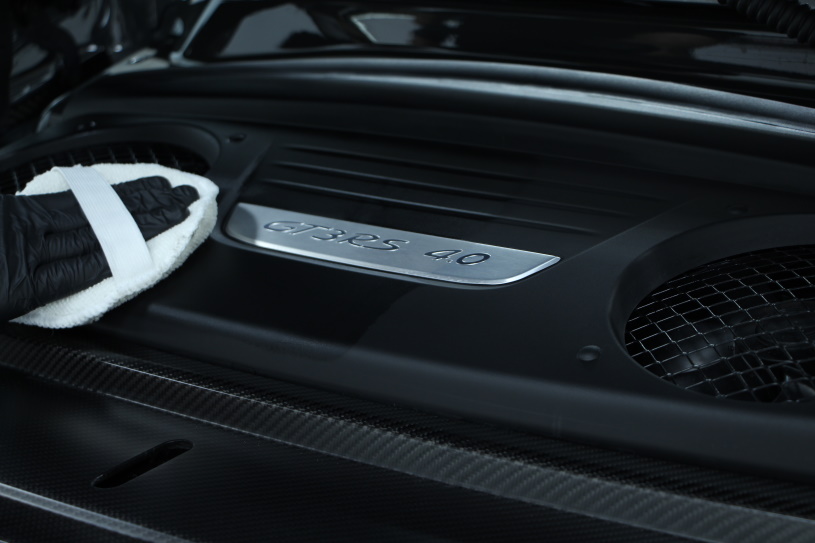
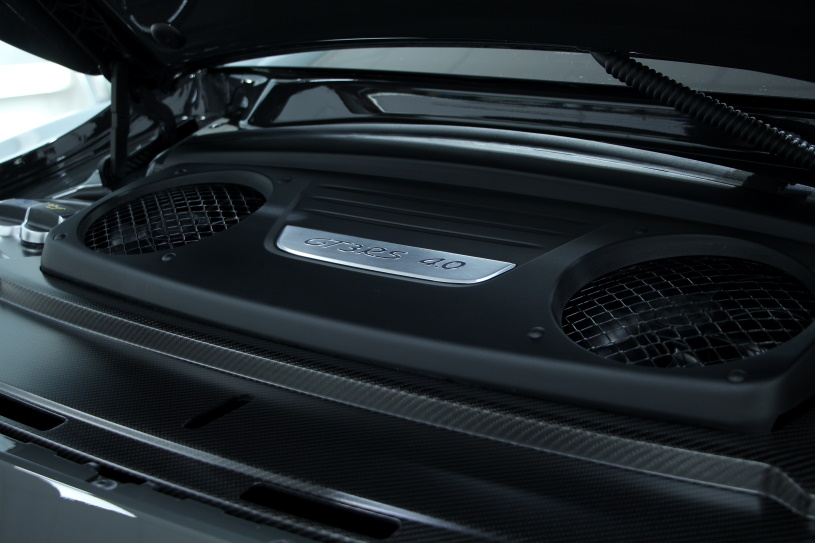
In terms of longevity, you can count on several weeks. It is clear that the treatment will be much more durable on non-exposed areas (interior plastics in particular). The advantage of Perl lies in its composition: it is based on silicon dioxide, which is the very component of ceramic coatings. As a result, you will benefit from excellent durability as well as great resistance to chemical aggressions during washing (alkaline pH in particular).
Conclusion:
CARPRO thus offers with Perl an excellent product with great versatility of use (exterior/interior plastics, tires, seals, engine, etc.). The finish left by Perl after treatment is truly impressive. A minor downside on tires (some streaks), but this is partly explained by the highly absorbent nature of the tires (very soft rubber).
In terms of quantity/price, priced at €12.95 for 500ml, Perl proves to be very affordable as you will use it mostly diluted (from 1:3 to 1:5).
The major advantage of Perl is also its resistance to repeated washing due to its composition. Your plastics will maintain a like-new look very durably.
A product to recommend overall — worth trying or rediscovering for the initiated.
Advantages
+ Variable finish depending on dilution
+ Good resistance to washing.
+ Quantity/price ratio.
Disadvantages
- Tricky application on certain tires.